10 things to consider before buying an electric vehicle in Nepal
Wheels of Nepal · Last updated: · 10 min read
Before you buy an EV in Nepal, make sure its real-world range covers your longest regular trip with a margin, that you can charge safely at home every night, and that you know exactly what the battery warranty covers. Then check the full price with registration, tax and insurance, the 60% loan limit and the running cost.
Electric vehicles are now a normal choice in Nepal, from small scooters to seven-seat SUVs. Running costs are low, because electricity is cheap compared with petrol, and the annual vehicle tax for most EVs is lower too. But an EV is a different kind of purchase. Where you sleep, where you park and how far you drive matter more than they do with a petrol car.
Here are ten things to check before you pay a deposit. Each one links to a deeper guide where we have one.
1. Your real daily distance, not the brochure range
Write down how far you actually drive on a normal day, and on your longest regular trip (a monthly visit home, say). Then look at the claimed range, and at which test it comes from, because the tests are not equally strict:
| Model (example) | Claimed range | Test cycle |
|---|---|---|
| Wuling Mini EV Long Range | 301 km | CLTC |
| BYD Dolphin | 340 km | WLTP |
| MG4 EV Comfort | 350 km | WLTP |
| Suzuki e VITARA Delta | 440 km | brand claim |
Figures from the official Nepal sites, via our catalogue (checked October 2026).
| Wuling Mini EV Long Range (CLTC) | 301 km |
|---|---|
| BYD Dolphin (WLTP) | 340 km |
| MG4 EV Comfort (WLTP) | 350 km |
| Suzuki e VITARA Delta (brand claim) | 440 km |
Source: Official Nepal distributor sites, via our catalogue (checked October 2026); test cycles differ, so do not compare directly
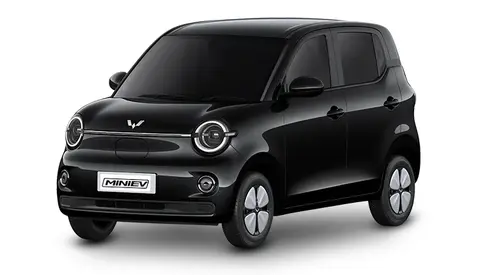 Wuling Mini EVRs 20.99 lakh – Rs 22.99 lakh
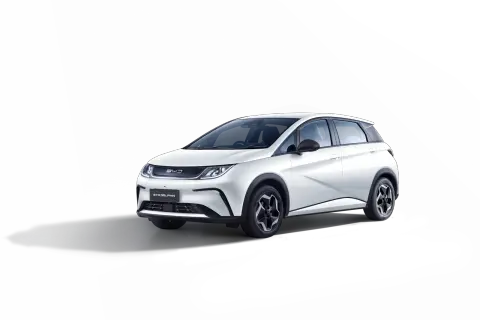 BYD DolphinRs 41.15 lakh
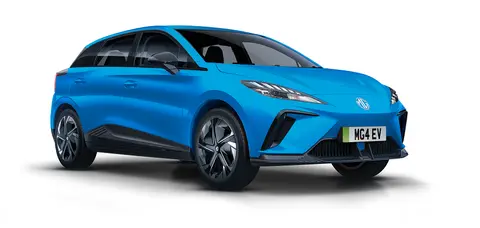 MG4 EVRs 41.49 lakh – Rs 49.99 lakh
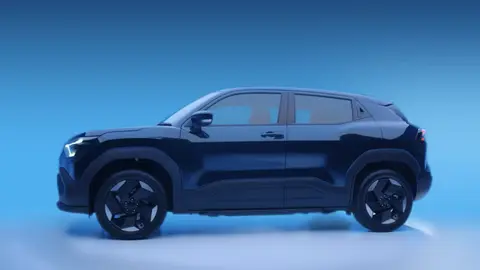 Suzuki E-VitaraRs 52.99 lakh – Rs 64.49 lakh
CLTC (the Chinese cycle), WLTP (the European cycle) and a brand's own claim are measured differently, so a CLTC figure and a WLTP figure are not directly comparable. On top of that, hills, air conditioning, passengers and highway speeds all reduce range in daily use. Leave yourself a comfortable margin. If your longest regular trip uses most of the claimed range, look at a bigger battery. Our glossary explains kWh and the test cycles.
2. Where you will charge every night
This is the single most important question. Most owners charge at home overnight, which is both the cheapest and the most convenient option. Before you buy, check:
- Is there a safe, dry spot where you park, within reach of a proper socket or a wall-mounted charger?
- Is the meter in your name, or will your landlord bill you? NEA's distribution bylaw lets customers charge through a separate meter in their compound when the car cannot be charged within the approved domestic load, and NEA will supply that meter on request (Spotlight Nepal).
- If you live in an apartment, does the building allow charging in the basement?
If the honest answer is "I will rely on public chargers", think twice, especially for a car. We cover the meter, load and safety side in detail in installing an EV charger at home, and public charging in our EV charging guide.
3. Charging speed, AC and DC
Two numbers decide how long charging takes:
- AC charging (kW) is the speed at home. It is set by the car's on-board charger. Suzuki's Nepal site, for example, bases its charging times on 7.4 kW single-phase AC: about 6.5 hours from 10% to 100% for the 49 kWh battery. Wuling quotes 7.2 hours from 20% to 100% for the Mini EV Long Range.
- DC fast charging (kW) is the speed at a public fast charger. Our catalogue lists 60 kW for the BYD Dolphin and 85 kW for the MG4 EV Comfort.
If you will drive between cities often, a higher DC figure saves time at the charger. If you mostly drive in town and charge at home, the AC figure matters more. Scooters usually charge from a normal socket with the supplied charger.
4. The battery warranty, and the small print
The battery is the most expensive part of an EV, so read the warranty carefully. Car warranties on official Nepal sites commonly run to about eight years for the battery, but the kilometre limits and what is covered differ. MG Nepal, for instance, lists three separate terms for the MG4 EV: one year for the vehicle, three years or 100,000 km for high-voltage components, and eight years or 150,000 km for the battery. Scooter warranties are often shorter and can differ by variant: Ather lists five years on the Rizta's base variant and eight years on others.
Ask the dealer for the full warranty document, and check whether it requires servicing only at authorised centres. We compare the brands in EV battery warranties in Nepal, brand by brand.
5. Service and parts near you
An EV needs less routine maintenance than a petrol car, but when something does go wrong, only trained technicians with the right tools can fix it. Before buying:
- Find the nearest authorised service centre, and ask how far it is from where you live and travel.
- Ask how long common parts take to arrive, and whether the workshop can repair or replace a battery module locally.
- Ask other owners of the same brand about their experience, but treat individual stories as stories.
A cheaper EV from a brand with no workshop in your city can cost you more in time and stress.
6. The full price, after this year's tax changes
The FY 2026/27 budget changed how electric cars are taxed: duty now depends on the car's customs value rather than motor power, and cars valued higher at customs pay much more. The Kathmandu Post warned that the revised slabs could slow the EV boom by pushing up prices of costlier models. Prices on dealers' sites move when stock imported under the new rules arrives, so:
- Compare the indicative ex-showroom price on the official site with the price on your quotation.
- Ask what the quoted price includes (registration, number plate, insurance, any charger).
- Ask whether the price is guaranteed until delivery.
Our FY 2026/27 EV tax explainer shows the slabs, and our guide to road tax and insurance covers the yearly extras.
7. The loan limit and your down payment
Nepal Rastra Bank caps loans for private vehicles at 60% of the vehicle's value, for electric and petrol vehicles alike (Ekantipur, February 2025). So for a Rs 40 lakh car, the most a bank will lend is Rs 24 lakh (0.6 × 40), and you need at least Rs 16 lakh of your own, plus registration, road tax and insurance. Run your numbers in the EMI calculator, and read our auto loan guide before you visit the bank.
8. Running cost: electricity, VAT and annual tax
Home charging is billed on NEA's normal domestic tariff. On a 15 A single-phase meter, units above 100 a month cost Rs 9.50 each, and units above 250 cost Rs 11.00 (NEA consumer tariff). A car adds many units each month, so most of its charging lands in those top blocks. The FY 2026/27 budget also added 5% VAT on household electricity above 50 units a month (The Kathmandu Post); check your latest bill.
Annual vehicle tax is set by your province and, for EVs, by motor power. In Bagmati, Fiscal Nepal reported that private EVs up to 50 kW now pay Rs 1,500 more a year than before. Even so, EV tax remains well below the tax on petrol cars. Our bluebook, road tax and insurance guide has the rates by province, and the EV vs petrol 5-year cost post does the full sum.
9. Insurance
Third-party insurance is compulsory, and the FY 2026/27 budget doubled the third-party compensation limit from Rs 5 lakh to Rs 10 lakh (Beema Post). Comprehensive cover protects the car itself. For an EV, ask the insurer two extra questions:
- Is battery damage from an accident or flooding covered, and up to what amount?
- Does the policy have conditions linked to the manufacturer's warranty? Some brands in Nepal, such as Dongfeng, tie their extended battery warranties to continuous cover with one named insurer, so switching insurer can end that warranty.
10. Safety, standards and your own habits
The Kathmandu Post's editorial board argued in September 2026 that Nepal has no dedicated mechanism to test whether imported EVs meet an international battery-safety standard, and that chargers and cables deserve the same scrutiny. Until rules catch up, part of the checking falls on the buyer:
- Prefer an established brand with a local distributor that can show you its warranty terms and recall process.
- Use the charger supplied or approved by the maker, plugged into a properly earthed socket, never an extension cord.
- Learn where the manual door release is, as the same editorial advises.
- Keep the car out of deep water, and have it inspected after any heavy impact underneath.
Quick pre-purchase checklist
| Question | Done? |
|---|---|
| Claimed range (and test cycle) covers my longest regular trip with a margin | ☐ |
| I have a safe place and a suitable meter to charge overnight | ☐ |
| AC and DC charging speeds suit my driving | ☐ |
| I have read the full battery and vehicle warranty | ☐ |
| An authorised service centre is within reach | ☐ |
| I have a written full price (with registration, tax and insurance) and delivery date | ☐ |
| I can pay at least 40% plus registration, tax and insurance myself | ☐ |
| I know my province's annual tax for this motor power | ☐ |
| I have an insurance quote that covers the battery | ☐ |
| I know the safety basics for charging at home | ☐ |
Ready to shortlist? Browse the electric car prices and electric scooter prices, see our best EVs under Rs 40 lakh, and put two models side by side in the compare tool. Prices in our catalogue are indicative ex-showroom prices from the official sites (checked October 2026).
New to EVs? Start with our complete guide to EVs in Nepal in 2026.
Sources
- Nepal Electricity Authority – Consumer tariff rates (domestic single-phase and three-phase tariffs)
- The Kathmandu Post – Households using over 50 electricity units to pay five percent VAT (18 July 2026)
- The Kathmandu Post – Revised tax slabs threaten EV boom in Nepal (1 June 2026)
- Ekantipur – Now only 60% loan is available to buy a vehicle (25 February 2025)
- Fiscal Nepal – Bagmati introduces online vehicle tax payment; tax on EVs up to 50 kW raised (30 June 2026)
- Beema Post – Government doubles third-party motor insurance coverage limit to Rs 1 million (May 2026)
- The Kathmandu Post – Editorial: Nepal fell in love with EVs. It forgot to regulate them (14 September 2026)
- Spotlight Nepal – NEA decides to allow vehicle charging stations in the individual household compound (20 January 2022)
- Cimex (BYD Nepal) – ATTO 2, ATTO 3 and Dolphin model pages and price list
- MG Motors Nepal – MG4 EV (warranty and charging)
- Suzuki Nepal – e VITARA (battery warranty, 7.4 kW single-phase AC charging)
- Wuling Nepal – Mini EV (CLTC range, charging times, warranty)
- Dongfeng Nepal – Extended warranty (tied to continuous Shikhar Insurance cover)
- Ather Energy Nepal – Rizta (battery warranty by variant)
#ev#buying-guide#charging#battery-warranty#cars#scooters