EV vs petrol in Nepal: the real 5-year cost compared
Wheels of Nepal · Last updated: · 11 min read
On energy alone, an electric scooter or car in Nepal costs roughly a tenth as much per km as a petrol one: in our worked examples the scooter saves about Rs 2.4 lakh over five years and the small car about Rs 11.2 lakh. Purchase price, annual tax, servicing and the battery change the total, so we show every assumption below.
"Electric is cheaper to run" is true in Nepal, but by how much? The honest answer depends on how far you ride, what your home electricity costs per unit, and what petrol costs on the day you fill up. So instead of one headline number, this guide shows the arithmetic. You can swap in your own figures, or use our EV vs petrol cost calculator.
We keep four costs separate, because they behave very differently:
- Energy (petrol or electricity): we can calculate this well.
- Purchase price: we take it from official price lists.
- Annual vehicle tax: set by each province; we show the published range for FY 2083/84.
- Servicing and battery: these are real costs, but nobody publishes reliable Nepal figures yet.
The inputs we used
Petrol price
Nepal Oil Corporation's latest press release, dated 2083/06/29 (mid-October 2026), kept petrol at Rs 200 per litre in Kathmandu, Pokhara and Dipayal. The price is Rs 197.50 or Rs 199 in its other two price categories. We use Rs 200.
Petrol is volatile. It reached Rs 219 a litre in Kathmandu earlier in 2026, fell to Rs 197 on 1 July, and rose again to Rs 200 in August. Further down we show what a Rs 20 swing does to the totals.
Electricity price
Most homes charge on the Nepal Electricity Authority's domestic tariff. The table shows the 15-ampere single-phase meter, the most common kind. Each block of units is charged at its own rate.
| Monthly units | Energy charge (Rs per unit) | Minimum charge (Rs per month) |
|---|---|---|
| 0–20 | 4.00 | 50 |
| 21–30 | 6.50 | 75 |
| 31–50 | 8.00 | 75 |
| 51–100 | 9.50 | 100 |
| 101–250 | 9.50 | 125 |
| Above 250 | 11.00 | 175 |
What matters for an EV is the extra units it adds on top of your normal use. For most households those extra units fall in the Rs 9.50 or Rs 11 blocks.
There is also VAT. A directive effective from 17 July 2026 added 5% VAT on household units above 50 a month. In September the energy and finance ministers agreed in principle to scrap it, but at the time of writing we had not seen a final Cabinet decision. To be safe, our worked examples use the highest likely rate: Rs 11 plus 5% VAT = Rs 11.55 per unit. If you pay less, your EV costs less than shown.
Efficiency: claims versus real life
Official efficiency figures come from lab tests. Real riding uses more energy, especially on hills, in traffic and with a passenger. So we start from each vehicle's official claim and then use a deliberately less favourable figure, labelled as our assumption.
| Vehicle (example) | Official claim | Figure we assume |
|---|---|---|
| TVS Jupiter petrol scooter | 53.84 km/l (ARAI) | 45 km/l |
| TVS iQube 3.0 electric scooter | 3 kWh battery, 100 km claimed (about 3 kWh per 100 km) | 4 kWh per 100 km at the plug |
| Small petrol car, e.g. a 1.2-litre sedan | 18.65 km/l (Honda's claimed figure for the Amaze manual) | 14 km/l |
| BYD Atto 1 Dynamic electric car | 30.08 kWh battery, 230 km WLTP (about 13.1 kWh per 100 km) | 16 kWh per 100 km at the plug |
The "at the plug" figures include some energy lost while charging. If you want to know what the lab names and battery figures mean, see kWh and WLTP in our glossary.
Scooter: 5-year energy cost
Assumption: 1,000 km a month (about 33 km a day), so 60,000 km over five years.
| Petrol scooter | Electric scooter | |
|---|---|---|
| Energy per month | 1,000 ÷ 45 = 22.2 litres | 1,000 × 0.04 = 40 units |
| Cost per month | 22.2 × Rs 200 = Rs 4,444 | 40 × Rs 11.55 = Rs 462 |
| Cost per km | Rs 4.44 | Rs 0.46 |
| 5-year energy cost | about Rs 2.67 lakh | about Rs 27,700 |
So on energy alone, the electric scooter saves about Rs 2.4 lakh over five years at this distance.
How the result moves with distance:
| Monthly distance | Petrol, 5 years | Electric, 5 years | Difference |
|---|---|---|---|
| 500 km | Rs 1.33 lakh | Rs 13,900 | Rs 1.19 lakh |
| 1,000 km | Rs 2.67 lakh | Rs 27,700 | Rs 2.39 lakh |
| 1,500 km | Rs 4.00 lakh | Rs 41,600 | Rs 3.58 lakh |
| 500 km a month | 1.19 lakh |
|---|---|
| 1,000 km a month | 2.39 lakh |
| 1,500 km a month | 3.58 lakh |
Source: Our worked example in this article: petrol Rs 200/l (NOC), electricity Rs 11.55/unit (NEA tariff + 5% VAT), 45 km/l vs 4 kWh per 100 km
Purchase price
These are indicative ex-showroom prices from the official sites, checked October 2026:
- TVS Jupiter: Rs 2,64,900 (petrol)
- TVS iQube 3.0: Rs 3,19,900 (electric)
- TVS Orbiter V2: Rs 2,81,900 (electric)
The iQube costs Rs 55,000 more than the Jupiter. At 1,000 km a month the monthly saving is about Rs 3,980 (Rs 4,444 minus Rs 462), so the gap is recovered in roughly 14 months. The Orbiter's Rs 17,000 gap is recovered in about four to five months.
Small car: 5-year energy cost
Assumption: 1,500 km a month, so 90,000 km over five years. A car adds about 240 units a month, which pushes most homes into the top Rs 11 block, so Rs 11.55 with VAT is realistic here.
| Petrol car | Electric car | |
|---|---|---|
| Energy per month | 1,500 ÷ 14 = 107 litres | 1,500 × 0.16 = 240 units |
| Cost per month | 107 × Rs 200 = Rs 21,429 | 240 × Rs 11.55 = Rs 2,772 |
| Cost per km | Rs 14.29 | Rs 1.85 |
| 5-year energy cost | about Rs 12.86 lakh | about Rs 1.66 lakh |
| Petrol scooter | 2.67 lakh |
|---|---|
| Electric scooter | 0.28 lakh |
| Petrol car | 12.86 lakh |
| Electric car | 1.66 lakh |
Source: Our worked examples in this article: petrol Rs 200/l (NOC), electricity Rs 11.55/unit (NEA tariff + 5% VAT); scooter 60,000 km, car 90,000 km
That is a difference of about Rs 11.2 lakh over five years. Even if you paid twice our home rate for every unit, for example by charging mostly at commercial chargers, the EV's energy cost would be about Rs 3.3 lakh. Public chargers set their own prices, so check the operator's rate. Our EV charging cost calculator does the sums for you.
Petrol price sensitivity (car, 90,000 km)
| Petrol price | 5-year fuel cost at 14 km/l |
|---|---|
| Rs 180 per litre | Rs 11.57 lakh |
| Rs 200 per litre | Rs 12.86 lakh |
| Rs 220 per litre | Rs 14.14 lakh |
Purchase price
In Nepal, small EVs are often not more expensive than comparable petrol cars. Indicative ex-showroom prices from the official sites, checked October 2026:
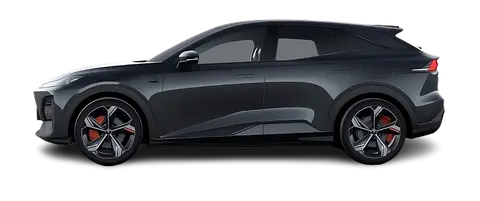
- BYD Atto 1 Dynamic: Rs 30.75 lakh (electric hatchback)
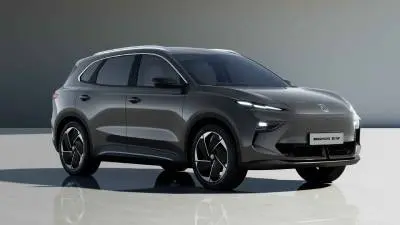
- Kaiyi e-Qute 04: Rs 25.96 lakh (electric hatchback)
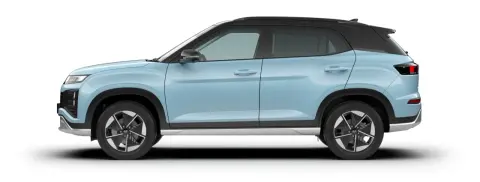
- Nissan Magnite VISIA: Rs 35.75 lakh (petrol compact SUV)
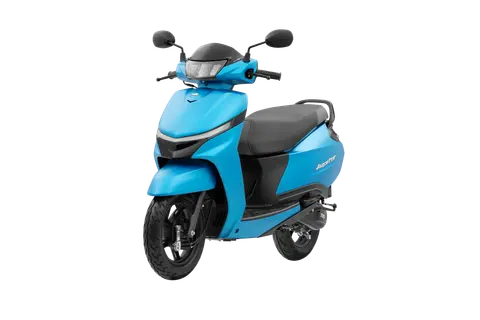 TVS JupiterRs 2,64,900
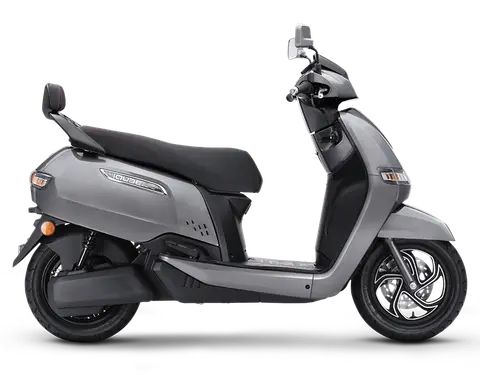 TVS iQubeRs 3,19,900 – Rs 3,49,900
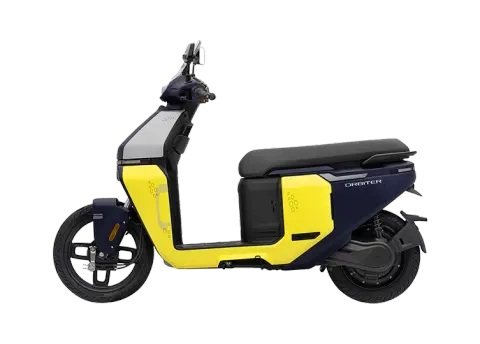 TVS OrbiterRs 2,81,900
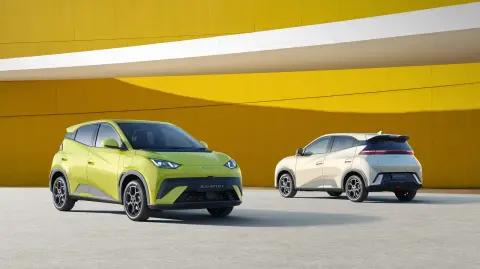 BYD ATTO 1Rs 30.75 lakh – Rs 34.8 lakh
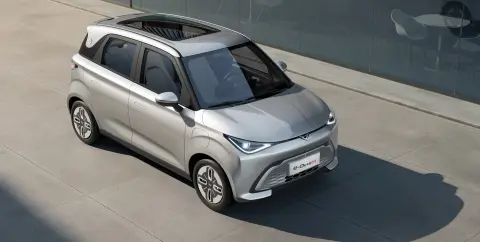 Kaiyi e-Qute 04Rs 25.96 lakh
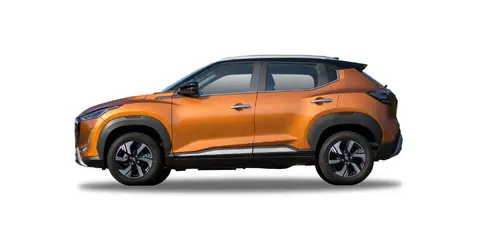 Nissan MagniteRs 35.75 lakh – Rs 53.99 lakh
These are different body types, so compare features as well as price with our compare tool. For more options, see our electric car price list.
Annual vehicle tax
Each province sets its own tax, so we show the FY 2083/84 range across all seven provinces for private vehicles, from Ratopati's comparison (July 2026).
| Vehicle | Annual tax (cheapest to dearest province) | Over 5 years |
|---|---|---|
| Electric car up to 50 kW (e.g. Atto 1, 45 kW) | Rs 2,500 to Rs 11,000 | Rs 12,500 to Rs 55,000 |
| Petrol car up to 1,000cc | Rs 21,000 to Rs 23,000 | Rs 1.05 to Rs 1.15 lakh |
| Petrol motorcycle or scooter up to 125cc | Rs 2,700 to Rs 3,100 | Rs 13,500 to Rs 15,500 |
Two things to note. First, a 1.2-litre car like our example sits in the next band up (1,001–1,500cc). We found no current published figure for that band, so check your province's rate. Second, in Bagmati, Fiscal Nepal reports that private EVs up to 50 kW now pay Rs 1,500 a year more than last year, while other rates were kept the same.
Electric two-wheelers are taxed by motor wattage; we could not confirm current rates, so ask your transport office.
Servicing and the battery: the honest uncertainty
- Servicing. An EV has no engine oil, spark plugs or clutch. Fewer parts wear out, but tyres, brakes, suspension and electronics still need care. We found no published, like-for-like service cost data for Nepal, so we have not put a number on it. Ask the dealer for the written service schedule and the charge for each visit, for both the EV and the petrol model you are considering.
- Battery warranty. Check the exact terms. Cimex lists 8 years or 1,50,000 km for the Atto 1, but its site does not say what that covers. Ather lists 5 years on the base Rizta's battery and 8 years on the LR. Read what counts as a defect, for example the percentage of capacity loss.
- Battery replacement. Out-of-warranty battery prices are rarely published in Nepal. If you plan to keep the vehicle beyond the warranty, ask for a written quote. Treat it as the biggest unknown in any long-term EV calculation.
- Resale value. The used EV market in Nepal is young, and there is no reliable resale data yet.
Car totals side by side (5 years)
| Cost item | Petrol car (example) | Electric car (example) |
|---|---|---|
| Energy (1,500 km/month) | about Rs 12.86 lakh | about Rs 1.66 lakh |
| Annual vehicle tax | Rs 1.05–1.15 lakh for a car up to 1,000cc; more for larger engines | Rs 12,500–55,000 for an EV up to 50 kW, depending on province |
| Servicing | ask dealer | ask dealer |
| Battery after warranty | n/a | ask dealer |
The bottom line
- On energy alone, EVs cost roughly a tenth as much per km as petrol in our examples. That holds even after we used conservative real-world efficiency and the highest likely electricity rate.
- The more you drive, the stronger the case. At 500 km a month the scooter saving is about Rs 1.2 lakh over five years. At 1,500 km it is about Rs 3.6 lakh.
- Home charging is what makes the numbers work. Without a safe socket where you park, your cost per unit and your convenience both change. See our guide to petrol vs electric two-wheelers for the practical side.
- Unknowns remain: future petrol prices, whether electricity VAT stays, battery prices and resale values. Re-run the numbers before you buy.
For the wider picture, read the complete guide to EVs in Nepal.
Sources
- Nepal Oil Corporation – press release on retail fuel prices (Kathmandu, Pokhara, Dipayal: Rs 200 per litre petrol), dated 2083/06/29
- Nepal Electricity Authority – Consumer tariff rates (domestic single-phase slabs; charging-station tariffs)
- The Kathmandu Post – Households using over 50 electricity units to pay five percent VAT (18 July 2026)
- The Kathmandu Post – Government weighs scrapping VAT on electricity (21 September 2026)
- ShareSansar – NOC raises fuel prices; petrol hits Rs 200 per litre in Kathmandu (3 August 2026)
- B360 Nepal – Petrol price raised to Rs 219 per litre
- TVS Motor – TVS Jupiter 110 mileage (ARAI-certified figure)
- Honda Cars India – Honda Amaze (1.2-litre petrol, claimed fuel efficiency)
- TVS Motor Nepal – iQube (price, battery, claimed range)
- Cimex (BYD Nepal) – price list
- Ratopati – In which province is the annual vehicle tax cheaper? (3 Shrawan 2083, FY 2083/84 rates by province)
- Fiscal Nepal – Bagmati introduces online vehicle tax payment; tax on EVs up to 50 kW raised (30 June 2026)
#ev#running-cost#petrol#scooters#cars#electricity-tariff