EV charging in Nepal: at home, fast chargers and highway trips
Wheels of Nepal · Last updated: · 10 min read
Most people who buy an electric car or scooter in Nepal charge it at home overnight and only use a public charger now and then, usually on a long drive.
That is good news: home charging is the cheapest and most convenient option, and it needs very little extra equipment. This guide explains how home charging works with the Nepal Electricity Authority (NEA), what public fast chargers are, how to behave at a shared charger, and how to plan a highway trip without stress.
If you are still deciding between electric and petrol, read EV vs petrol in Nepal: the real 5-year cost first.
The basics: kW, kWh and AC vs DC
Two numbers matter. A battery's size is measured in kilowatt-hours (kWh), the same "unit" that appears on your electricity bill. A charger's speed is measured in kilowatts (kW). In ideal conditions, a 7 kW charger adds about 7 kWh to the battery per hour, but in practice a little energy is lost as heat, so real charging takes slightly longer and draws slightly more from the wall.
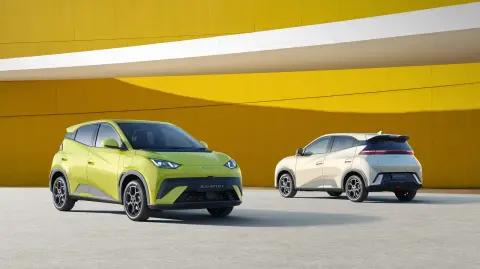
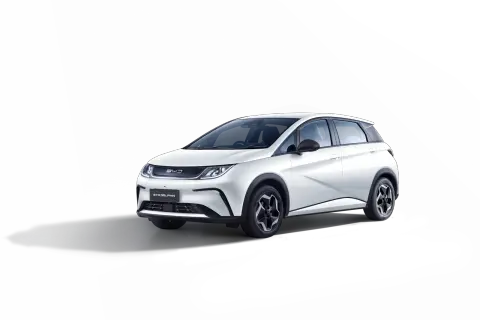
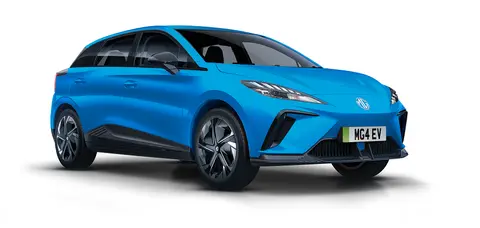
- AC charging is what you do at home or at a hotel. The car's built-in charger converts the power, so the speed is capped by the car itself. For example, our catalogue lists 7 kW AC charging for the BYD Dolphin and the MG4 EV, and 3.3 kW for the Seres Mini EV (manufacturer figures).
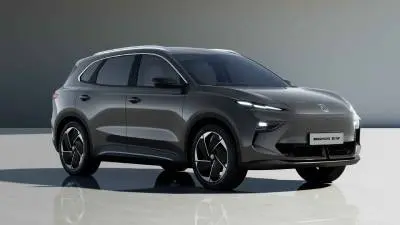
- DC fast charging is what public "fast chargers" provide. The charger itself converts the power and feeds the battery directly, so it is much quicker. Again the car sets a maximum: the catalogue lists 60 kW DC for the Dolphin and 85 kW DC for the MG4 EV Comfort.
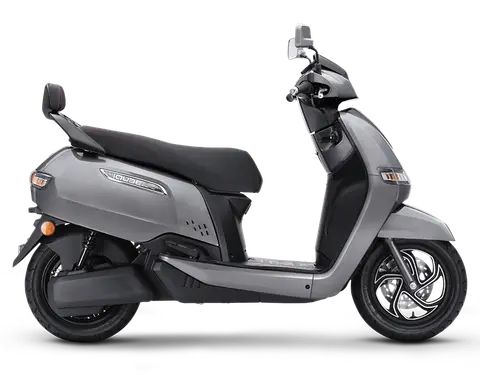
Most electric scooters, such as the TVS iQube, simply charge from a normal household socket with the supplied charger.
Charging at home
Do you need a separate meter?
You do not have to get one. Under the Electricity Distribution Bylaw that NEA brought into force in January 2022, EV owners may install charging units at home, and NEA allows the electricity supply to be upgraded for the purpose (myRepublica). Spotlight Nepal reported that the bylaw also lets customers charge with a separate, larger-capacity meter in their home compound when the car cannot be charged within the approved domestic load, and that NEA will supply a separate meter to customers who ask for one for EV charging. Tenants can get their own NEA meters too, after meeting certain conditions, which helps if your landlord bills you more than NEA's tariff.
A separate meter is worth considering if:
- you rent and want your charging billed to you, not hidden in the landlord's bill;
- you plan to fit a 7 kW wall box, which draws far more than a kettle and for hours at a time;
- your current connection is a small single-phase meter and already near its limit.
Ask your local NEA distribution centre what load and meter size you need, and use a licensed electrician for any wall box. Follow the car maker's installation instructions; do not run a car charger through an extension cord or a damaged socket.
What does home charging cost?
Home charging is billed on the normal domestic tariff. NEA's published consumer tariff for single-phase 230 V connections uses blocks: the more units you use in a month, the higher the rate for the extra units.
| Monthly units (kWh) | 15 A meter: energy charge per unit | Minimum monthly charge (15 A) |
|---|---|---|
| 0–20 | Rs 4.00 | Rs 50 |
| 21–30 | Rs 6.50 | Rs 75 |
| 31–50 | Rs 8.00 | Rs 75 |
| 51–100 | Rs 9.50 | Rs 100 |
| 101–250 | Rs 9.50 | Rs 125 |
| Above 250 | Rs 11.00 | Rs 175 |
Source: NEA consumer tariff. Each block is charged at its own rate. The 30 A and 60 A meters use the same rates from 21 units upward.
| 0–20 units | 4 Rs |
|---|---|
| 21–30 units | 6.5 Rs |
| 31–50 units | 8 Rs |
| 51–100 units | 9.5 Rs |
| 101–250 units | 9.5 Rs |
| Above 250 units | 11 Rs |
Source: Nepal Electricity Authority – consumer tariff (domestic single-phase 230 V)
Because a car adds many units every month, most of its charging falls into the Rs 9.50 or Rs 11.00 blocks. On top of that, the FY 2026/27 budget brought in 5% VAT on household electricity above 50 units a month. As of 21 September 2026 The Kathmandu Post reported the VAT was still in force, although the energy and finance ministers had agreed in principle to remove it. Check your latest bill.
Worked example (illustration only). The BYD Dolphin has a 44.9 kWh battery. Charging it from 20% to 80% puts in about 26.9 kWh (0.6 × 44.9).
- At Rs 9.50 per unit: 26.9 × 9.50 ≈ Rs 256
- At Rs 11.00 per unit: 26.9 × 11.00 ≈ Rs 296
- Add 5% VAT if it applies, and a little extra for charging losses.
On a 7 kW home charger that top-up takes roughly four hours (26.9 ÷ 7 ≈ 3.8 hours) before losses. A scooter is far cheaper: filling the TVS iQube 3.0's 3 kWh battery from empty is about 3 × 9.50 ≈ Rs 29.
To do the sum for your own vehicle and driving, use our EV charging cost calculator.
Habits that help at home
- Charge overnight. It is convenient, and the car is ready each morning.
- Many owners set a daily charge limit below 100% and charge to full only before a long trip. Your owner's manual will give the maker's advice for your battery.
- Do not leave a charging cable lying in a puddle or where it can be run over.
Public and fast chargers
NEA's network
NEA switched on 51 fast-charging stations at once in September 2023, spread along highways, at bus parks and in cities across all seven provinces. Himal Press reported that each had a 142 kW charger, and that the stations were monitored from Kathmandu, with payment by QR code or mobile app. By September 2024, Ratopati put NEA's own network at 62 stations, while noting that charging infrastructure had not kept up with the number of EVs on the road. Long queues were reported at some stations during Dashain and Tihar.
We do not publish a current national charger count, because the figures we found from map apps and directories do not agree and could not be checked against an official list. Use the operator's own app or call ahead.
Khalti has published steps for paying for NEA charging through its wallet using the NEA charging app, so it is worth installing that app before your first public charge.
What do public chargers cost?
Charging stations are billed by NEA on a special "public transportation (charging station)" tariff. According to NEA's 2025 tariff, reproduced in a July 2026 report prepared for the Electricity Regulatory Commission, a low-voltage charging station pays:
| Period | Time | Rate the station pays NEA (per unit) |
|---|---|---|
| Baishakh–Mangsir, peak | 5 pm–11 pm | Rs 7.25 |
| Baishakh–Mangsir, normal | 5 am–5 pm | Rs 5.75 |
| Baishakh–Mangsir, off-peak | 11 pm–5 am | Rs 4.30 |
| Poush–Chaitra, peak | 5 pm–11 pm | Rs 7.25 |
| Poush–Chaitra, normal | outside peak hours | Rs 5.75 |
| Peak, 5 pm–11 pm | 7.25 Rs |
|---|---|
| Normal, 5 am–5 pm | 5.75 Rs |
| Off-peak, 11 pm–5 am | 4.3 Rs |
Source: NEA tariff 2025, reproduced in the Electricity Regulatory Commission's July 2026 tariff report (Annex 1)
For Poush–Chaitra the tariff lists only a peak rate and a normal rate. The station also pays a monthly demand charge of Rs 200 per kVA. These are the operator's costs, not the price you pay. Operators add their own margin: a myRepublica report said NEA allowed stations to charge customers 20% on top of the NEA rate, and in 2024 an NEA committee proposed raising that margin, a change that needed the regulator's approval. Private stations set their own prices. Always check the price per unit shown on the charger or in the app before you plug in.
Charging etiquette
Shared chargers work only if everyone is considerate:
- Move your car when you are done. Do not park at a charger once the session ends.
- Take only what you need. If others are waiting, charge enough to reach your next stop rather than to 100%.
- Do not unplug someone else's car unless the station staff say you may.
- Coil the cable and hang it back up; a cable left on the ground gets damaged by tyres and water.
- Report faults to the operator, so the next driver is not stranded.
Planning a highway trip
Hills, heat, air conditioning, passengers and speed all reduce range compared with the brochure figure, which is usually measured in gentler test conditions. Plan with a safety margin.
- Know your real range. Note how many kilometres you get per 10% of battery on your normal drives, and use that rather than the claimed range.
- Map your chargers before you leave. Pick a main stop and a backup, and call or check the app to see whether they are working.
- Arrive with a buffer. Aim to reach each charger with a comfortable reserve, so a broken or busy charger is not a crisis.
- Charge to about 80% on fast chargers. Fast charging is quickest at lower battery levels. Ford's guidance, for example, says the fastest speeds come below 80% and suggests charging only as much as you need for the next leg. Charging behaviour differs from model to model, so check your own manual.
- Allow time for queues, especially around festivals and on weekends.
- Check the road before you set off. In the monsoon, landslides close roads at short notice. The Kathmandu District Administration Office advises checking road conditions with the police before travelling; you can call Traffic Police on 103 or Nepal Police on 100. See our monsoon driving tips for more.
- Leave home full. Start the trip at 100% from your home charger, which is cheaper and saves a stop.
Quick checklist
| Before you buy | Before a long trip |
|---|---|
| Check the car's AC and DC charging speeds | Note your real-world range |
| Ask NEA about your meter and load | Plan main and backup chargers |
| Budget for a licensed electrician | Install the operators' payment apps |
| Read the maker's charging and battery advice | Check road status (103 / 100) |
Comparing models by battery size and charging speed? Browse our EV price list and electric car prices, or put two cars side by side in the compare tool. Prices in our catalogue are indicative ex-showroom prices from official sites (checked October 2026).
Sources
- Nepal Electricity Authority – Consumer tariff rates (domestic single-phase slabs)
- Electricity Regulatory Commission – Report on Long Run Marginal Cost Estimation and Tariff Design (July 2026), Annex 1: Electricity Tariff of NEA 2025 (charging station and time-of-day rates)
- myRepublica – Residents can install EV charging units for their personal use: NEA
- Spotlight Nepal – NEA decides to allow vehicle charging stations in the individual household compound (20 January 2022)
- Nepal News – Tenants can now keep separate electricity meter (24 December 2021)
- The Kathmandu Post – Government weighs scrapping VAT on electricity (21 September 2026)
- Himal Press – NEA switches on 51 charging stations across the country (6 September 2023)
- Ratopati – EVs up, charging stations lag (10 September 2024)
- myRepublica – NEA reduces electricity tariff rate for charging stations
- Khalti – Paying for NEA EV charging with the Khalti wallet
- Ford – What is DC fast charging? (charging speed above and below 80%)
- The Himalayan Times – Kathmandu DAO urges caution while travelling during heavy rain (18 July 2026)
- Official brand sites via our catalogue – BYD (Cimex) price list, MG Motors Nepal, TVS Nepal, Seres
#ev#charging#electricity-tariff#nea#road-trips