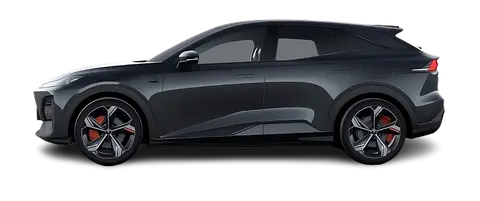
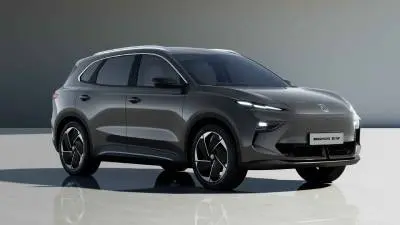
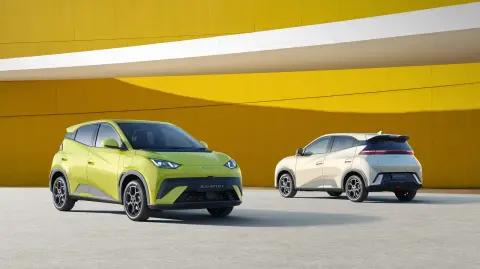
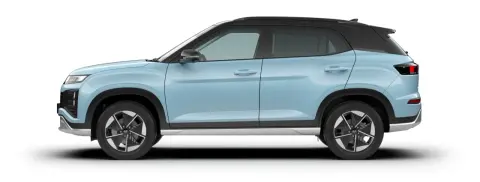
Kia Syros EV vs Tata Punch.ev vs Nammi Vigo in Nepal: price, range and size compared
Wheels of Nepal · पछिल्लो अद्यावधिक: · ११ मिनेट पढ्न
हाम्रा लेखका नेपाली संस्करण छिट्टै आउँदैछन्। तलका लेख अंग्रेजीमा छन्। अंग्रेजीमा पढ्नुहोस् →
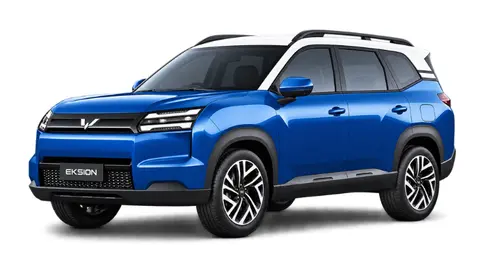
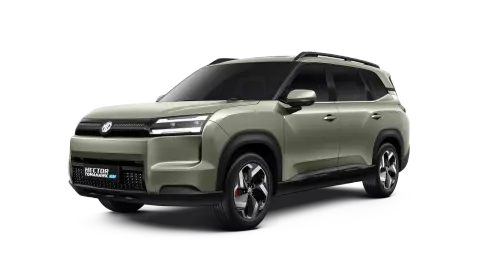
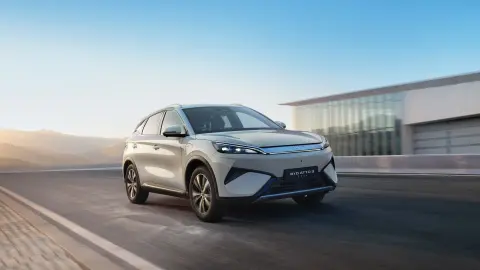
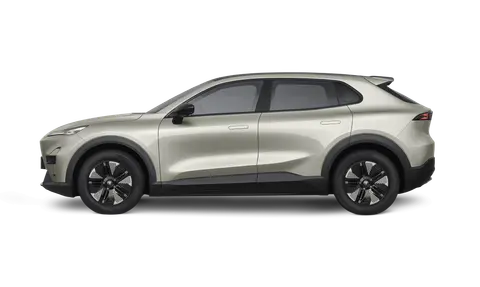
The Tata Punch.ev is the cheapest of the three at Rs 33,99,000, the Kia Syros EV costs Rs 37,90,000 and the Dongfeng Nammi Vigo starts at Rs 37,99,000 (indicative ex-showroom prices in Nepal, checked October 2026). For roughly the same money as the Syros, the Vigo is the biggest car with the biggest battery; the Syros has the longest claimed range on paper; the Punch.ev is the smallest and lowest-priced way into an electric SUV.
All three are five-seat electric SUVs, and all three are among the cars Nepali buyers are asking about most right now. They come from three different places. The Syros EV is Korean (Kia, sold in Nepal by Kia Nepal). The Punch.ev is Indian (Tata, sold by Sipradi Trading). The Nammi Vigo is Chinese (Dongfeng, sold by MAW Vriddhi).
We have not driven these cars, so this comparison is built from the official figures only. Kia Nepal's own website does not yet have a Syros EV page, so the Syros specifications below are Kia India's manufacturer figures and may differ for Nepal.
How much do the Syros EV, Punch.ev and Nammi Vigo cost in Nepal?
| Model | Variant | Battery | Indicative ex-showroom price |
|---|---|---|---|
| Tata Punch.ev | Smart+ 32 (Medium Range) | not stated | Rs 33,99,000 |
| Tata Punch.ev | Empowered 40 | 40 kWh | Rs 36,99,000 |
| Tata Punch.ev | Empowered+ S 40 | 40 kWh | Rs 37,99,000 |
| Kia Syros EV | HTK | 42 kWh | Rs 37,90,000 |
| Dongfeng Nammi Vigo | E2 | 51.87 kWh | Rs 37,99,000 |
| Dongfeng Nammi Vigo | E2+ | 51.87 kWh | Rs 43,99,000 |
Prices checked October 2026. Prices can change at any time; confirm the price on the day at the showroom.
The three cars overlap almost exactly between Rs 37 lakh and Rs 38 lakh. At that price you can choose the Punch.ev Empowered+ S 40, the only Syros EV version sold here, or the Vigo E2. The Punch.ev also goes lower, to Rs 33.99 lakh, and the Vigo goes higher, to Rs 43.99 lakh for the E2+ with a moonroof and 18-inch wheels.
| Tata Punch.ev | 33.99 lakh |
|---|---|
| Kia Syros EV | 37.9 lakh |
| Dongfeng Nammi Vigo | 37.99 lakh |
Source: Indicative ex-showroom prices, checked October 2026
Want to see them with live prices and photos? Open all three in our compare tool.
Which has the biggest battery and the longest range?
| Kia Syros EV HTK | Tata Punch.ev (40 kWh) | Nammi Vigo E2 | |
|---|---|---|---|
| Battery | 42 kWh | 40 kWh | 51.87 kWh (LFP) |
| Claimed range | 443 km (MIDC) | 300–325 km (test not stated) | 350 km (WLTP) |
| Motor power | 99 kW | 95 kW | 99 kW |
| Torque | 255 Nm | 154 Nm | not published |
| DC fast charging | 10–80% in 39 min on a 100 kW charger | not stated | listed as 167 kW; to 80% in 18 min (start level not stated) |
| AC charging | 10–100% in 4 hours on an 11 kW charger | not stated | not stated |
Syros EV: Kia India manufacturer figures (may differ in Nepal). Punch.ev: Sipradi's official Nepal page, which lists 300–325 km for the Long Range model. Vigo: Dongfeng Nepal's official brochure.
The headline range numbers are not measured the same way, so do not compare them directly:
- Syros EV, 443 km on MIDC. MIDC is India's test, and it is based on the old European NEDC cycle, which gives generous numbers. Our range test guide explains why a WLTP figure for the same car usually comes out around 0.8 times an NEDC-type figure. By that rough rule, the Syros would be in the region of 355 km on WLTP. That is our estimate, not a Kia figure.
- Punch.ev, 300–325 km. Sipradi's page gives this range without naming a test, and does not split it by variant. Ask the showroom which test it comes from.
- Nammi Vigo, 350 km on WLTP. WLTP is the strictest of the common tests, so this number is the most realistic of the three.
On battery size, the Vigo carries about 10 kWh more than the Syros and about 12 kWh more than the Punch.ev 40. On torque, the Syros EV's published 255 Nm is well above the Punch.ev's 154 Nm. Dongfeng does not publish a torque figure for the Vigo.
| Kia Syros EV | 42 kWh |
|---|---|
| Tata Punch.ev 40 | 40 kWh |
| Nammi Vigo | 51.87 kWh |
Source: Kia India; Sipradi (Tata Nepal); Dongfeng Nepal brochure, October 2026
Which is the biggest car, with the most boot space?
| Kia Syros EV | Tata Punch.ev | Nammi Vigo | |
|---|---|---|---|
| Length | 3,995 mm | 3,880 mm | 4,306 mm |
| Width | 1,805 mm | 1,742 mm | 1,868 mm |
| Height | 1,670 mm (with roof rails) | 1,622 mm | 1,654 mm |
| Wheelbase | 2,550 mm | 2,445 mm | 2,715 mm |
| Ground clearance | not stated | 195 mm | 190 mm |
| Boot | 390 L | 366 L | 572 L |
| Tyres | 215/60 R16 | 195/60 R16 | 215/60 R17 (E2) |
The Vigo is clearly the largest car. It is 311 mm longer than the Syros and 426 mm longer than the Punch.ev, and its wheelbase is 165 mm longer than the Syros's and 270 mm longer than the Punch.ev's. A longer wheelbase usually means more rear legroom, but sit in the back seat yourself before you decide.
The Syros and Punch.ev are both under 4 metres long, which makes them easier to park in Kathmandu's narrow lanes. The Punch.ev is the most compact of the three, and its 195 mm published ground clearance is the highest here. Kia India does not list a ground clearance figure for the Syros EV in the sources we checked.
Boot figures are measured in different ways by different makers, so take the Vigo's 572 litres as the brochure's claim and look at the space in person.
What safety equipment do they have?
All three list six airbags: Kia India for the Syros EV, ShareSansar's report of the Nepal launch for the Punch.ev, and the official brochure for the Vigo.
- Kia Syros EV: six airbags, ESC, and disc brakes on all four wheels (Kia India figures). A 12.3-inch screen.
- Tata Punch.ev: six airbags, disc brakes at the front and drum brakes at the rear (Sipradi's page).
- Nammi Vigo: six airbags, ABS with EBD, ESC, traction control, hill start assist, tyre pressure monitoring, ISOFIX, a 360-degree camera, adaptive cruise control and a Level 2 ADAS set with automatic emergency braking and lane keeping. A 12.8-inch central screen. Disc brakes all round.
On published equipment, the Vigo E2 lists the most. Kia and Tata have more features than we have listed here, but we only include what the official sources we used confirm for these versions. Ask each showroom for the full feature list of the exact variant you are buying.
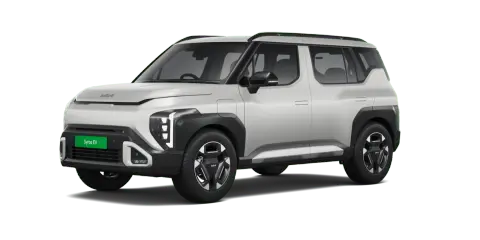 Kia Syros EVरु ३७.९ लाखvs
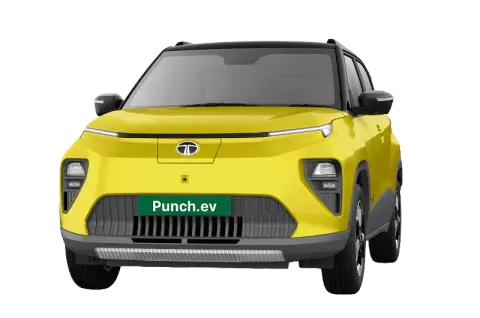 Tata Punch.evरु ३३.९९ लाख – रु ३७.९९ लाखvs
 Dongfeng Nammi Vigoरु ३७.९९ लाख – रु ४३.९९ लाखCompare side by side →
What about warranty?
| Battery and motor warranty in Nepal | |
|---|---|
| Kia Syros EV | not published by Kia Nepal yet |
| Tata Punch.ev | "Tata standard warranty policy" (terms not listed on the booking page) |
| Nammi Vigo | 8 years / 2,00,000 km standard; 11 years / 2,50,000 km paid extended plan |
Kia India offers a battery warranty for Indian buyers, but that is an India-only offer and does not automatically apply in Nepal. For any EV, get the battery warranty in years and kilometres written on your invoice. Our EV battery warranty guide lists what to check.
How much does it cost to charge and finance them?
At home, the NEA domestic tariff is Rs 11 per unit above 250 units a month, and 5% VAT applies to household units above 50 a month. We use Rs 11.55 per unit. Filling each battery from empty costs:
| Battery | Cost of one full battery at Rs 11.55/unit | |
|---|---|---|
| Tata Punch.ev 40 | 40 kWh | about Rs 462 |
| Kia Syros EV | 42 kWh | about Rs 485 |
| Nammi Vigo | 51.87 kWh | about Rs 599 |
These figures are battery capacity times the tariff. Charging losses add roughly 10–15% at the plug; that is a typical figure, not a test of these cars. For the full EV vs petrol picture, use our EV vs petrol cost calculator or read the EV vs petrol 5-year cost guide.
On loans, Nepal Rastra Bank caps vehicle loans at 60% of the price, so you need at least 40% as a down payment:
| Price | Maximum loan (60%) | Minimum down payment (40%) | |
|---|---|---|---|
| Punch.ev Smart+ 32 | Rs 33,99,000 | Rs 20,39,400 | Rs 13,59,600 |
| Syros EV HTK | Rs 37,90,000 | Rs 22,74,000 | Rs 15,16,000 |
| Vigo E2 | Rs 37,99,000 | Rs 22,79,400 | Rs 15,19,600 |
Work out your monthly payment with our EMI calculator, or read the auto loan guide.
One more number: battery per rupee. The Vigo E2 works out to about Rs 73,200 per kWh (Rs 37,99,000 ÷ 51.87), the Syros EV to about Rs 90,200 (Rs 37,90,000 ÷ 42) and the Punch.ev Empowered 40 to about Rs 92,500 (Rs 36,99,000 ÷ 40).
Which one should you buy?
None of the three wins on everything, so match the car to your needs:
- Choose the Tata Punch.ev if budget and size matter most. It is the cheapest of the three by about Rs 4 lakh, the easiest to park, and has the highest published ground clearance (195 mm).
- Choose the Kia Syros EV if you want the most torque and a car that is still under 4 metres long, and you value Kia's brand. Its Nepal specifications and warranty have not been published by Kia Nepal yet, so get them in writing before you pay.
- Choose the Dongfeng Nammi Vigo if you carry a family and luggage. For about the same price as the Syros, it is the biggest car, with the biggest battery, the biggest stated boot, the WLTP-rated range and the longest published list of safety features.
What we like
- Punch.ev: lowest price, most compact, 195 mm ground clearance
- Syros EV: 255 Nm torque, rear disc brakes, under 4 m long
- Nammi Vigo: 51.87 kWh battery, 572 L boot, Level 2 ADAS, 8-year battery warranty published
What could be better
- Punch.ev: range test not stated, rear drum brakes
- Syros EV: no Nepal spec sheet or warranty published yet
- Nammi Vigo: torque and AC charging power not published; longest car to park
What should you check before booking?
- Range on the same test: ask Tata and Kia Nepal for WLTP figures so you can compare with the Vigo's 350 km.
- Charging: the AC charging power, whether a home charger is included, and the DC time from 20% or 30%. Our EV charging guide and home charger guide help.
- Warranty in writing: the battery and motor period in years and kilometres, on the invoice.
- Service: the nearest authorised workshop to where you live, and the cost of scheduled servicing.
- The price on the day, including any festival offer, before you pay a booking amount.
Which is cheaper in Nepal, the Tata Punch.ev or the Kia Syros EV?
The Tata Punch.ev. It starts at Rs 33,99,000 (Smart+ 32), against Rs 37,90,000 for the Kia Syros EV HTK, indicative ex-showroom prices checked October 2026.
Which has the longest range: Syros EV, Punch.ev or Nammi Vigo?
The Syros EV has the highest claimed figure, 443 km, but on India's generous MIDC test. The Nammi Vigo's 350 km is on the stricter WLTP test. Tata Nepal lists 300–325 km for the Punch.ev without naming the test, so the three are not directly comparable.
Which is the biggest of the three?
The Dongfeng Nammi Vigo: 4,306 mm long with a 2,715 mm wheelbase and a stated 572-litre boot. The Syros EV (3,995 mm) and Punch.ev (3,880 mm) are both under 4 metres.
Do all three have six airbags?
Yes. Kia India lists six airbags for the Syros EV, the Punch.ev's Nepal launch report says six, and the Nammi Vigo's official brochure lists six.
Read next
स्रोतहरू
- Kia India – Syros EV specifications
- Kia India – Syros EV brochure (2026)
- Sipradi Trading (Tata Motors Nepal) – Punch.ev booking page, prices and specifications
- ShareSansar – Tata Motors unveils new Punch.ev and Tiago.ev at NAIMA Nepal Mobility Expo 2026 (12 August 2026)
- Dongfeng Nepal (MAW Vriddhi) – Nammi Vigo model page and prices
- Dongfeng Nepal – Nammi Vigo brochure and technical specifications
- Dongfeng Nepal – Extended warranty
- Nepal Electricity Authority – Consumer tariff rates
- The Kathmandu Post – Households using over 50 electricity units to pay five percent VAT (18 July 2026)
- Business 360 – Monetary policy mid-term review: vehicle loan ratio set at 60% (26 February 2025)
#kia#syros-ev#tata#punch-ev#dongfeng#nammi#vigo#electric-suv#ev#comparison