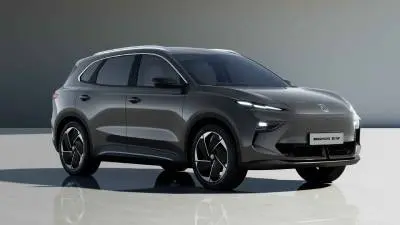
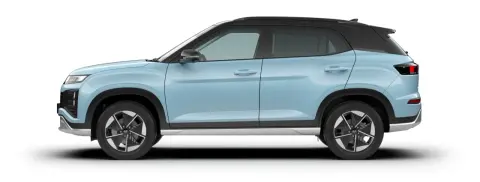
Nepal's FY 2026/27 EV tax changes explained: which EVs got cheaper or costlier
Wheels of Nepal · पछिल्लो अद्यावधिक: · १० मिनेट पढ्न
हाम्रा लेखका नेपाली संस्करण छिट्टै आउँदैछन्। तलका लेख अंग्रेजीमा छन्। अंग्रेजीमा पढ्नुहोस् →
From FY 2026/27, Nepal taxes electric cars by their customs (CIF) value instead of motor power: 20% customs duty plus a Clean Infrastructure Investment Fee of 2.5% to 130%, then road fee and VAT. For EVs valued up to Rs 20 lakh at customs the headline charges are similar to before; above that the tax rises steeply, most of all above Rs 40 lakh.
Nepal's budget for fiscal year 2026/27 (BS 2083/84) was presented on 29 May 2026 (Jestha 15, 2083). It changed how electric cars are taxed. For years, the main EV import taxes depended on the motor's peak power in kilowatts (kW). Now they depend on the vehicle's customs value, its CIF price in rupees. This guide explains the new structure, works through examples, and shows which buyers win and which lose.
A note on confidence: we based the rates below on the Finance Bill text, the finance minister's remarks and a Ministry of Finance clarification as reported by Karobar Daily and Arthikpati, and reporting by the Kathmandu Post. We could not read the final Finance Act from the Nepal Gazette directly. Treat the figures as the best available, and confirm with your dealer before you pay a deposit.
What changed, in one minute
- Excise duty on EVs is gone. It has been replaced by a new Clean Infrastructure Investment Fee (CIIF).
- Customs duty is a flat 20% on all electric cars, whatever their motor power.
- The CIIF rises in steps with the car's customs value, from 2.5% up to 130%.
- A road construction fee (2.5% or 5%) and 13% VAT still apply on top.
- The old motor-power system is scrapped. The government said some importers had been declaring lower peak-power ratings to fall into cheaper bands.
The new slabs for electric cars
The table uses customs value (CIF), not the showroom price. If you need a refresher, our glossary explains CIF value.
| Customs value (CIF) | Customs duty | CIIF | Road construction fee | VAT |
|---|---|---|---|---|
| Up to Rs 20 lakh | 20% | 2.5% | 2.5% | 13% |
| Over Rs 20 lakh to Rs 30 lakh | 20% | 20% | 5% | 13% |
| Over Rs 30 lakh to Rs 40 lakh | 20% | 35% | 5% | 13% |
| Over Rs 40 lakh to Rs 50 lakh | 20% | 90% | 5% | 13% |
| Over Rs 50 lakh | 20% | 130% | 5% | 13% |
| Up to Rs 20 lakh | 2.5 % |
|---|---|
| Rs 20–30 lakh | 20 % |
| Rs 30–40 lakh | 35 % |
| Rs 40–50 lakh | 90 % |
| Over Rs 50 lakh | 130 % |
Source: FY 2026/27 Finance Bill rates as reported by Karobar Daily, Arthikpati and The Kathmandu Post (slab table above)
Two points cause confusion online:
- 35%, 90% and 130% are the totals. The bill words the top three bands as an additional 15%, 70% and 110% on top of the 20% base CIIF. Some websites print 15/70/110 as if they were the full rates. The Kathmandu Post and Karobar Daily both give the totals of 35, 90 and 130, and the Ministry of Finance clarification reported by Arthikpati confirmed 20% for the Rs 20–30 lakh band.
- The road fee for the cheapest band. The Kathmandu Post gives a 5% road fee without exceptions. Karobar Daily reported 2.5% for EVs valued up to Rs 20 lakh, and quoted the finance minister saying the lowest-tier EVs pay 2.5% while the rest pay the standard 5%. Our examples use 2.5% up to Rs 20 lakh and 5% above it.
How the taxes stack
The order matters, because each charge is calculated on a base that already includes the ones before it:
- Customs = 20% of CIF value.
- CIIF = band rate × (CIF + customs). The bill says the fee is charged on the value after customs is added.
- Road construction fee = rate × (CIF + customs + CIIF). The law sets its base as the value including all taxes except VAT.
- VAT = 13% × everything above. This follows normal customs practice; the bill does not spell it out for EVs.
What you get at the end is the tax-paid import cost. It is not the showroom price, which also includes freight inside Nepal, the dealer's margin and other costs.
Worked examples
All five are examples, not real cars. We picked one value inside each band.
| Example CIF value | Customs (20%) | CIIF | Road fee | VAT (13%) | Tax-paid cost | Taxes as % of CIF |
|---|---|---|---|---|---|---|
| Rs 15 lakh | 3.00 | 0.45 | 0.46 | 2.46 | Rs 21.37 lakh | 42% |
| Rs 25 lakh | 5.00 | 6.00 | 1.80 | 4.91 | Rs 42.71 lakh | 71% |
| Rs 35 lakh | 7.00 | 14.70 | 2.84 | 7.74 | Rs 67.27 lakh | 92% |
| Rs 45 lakh | 9.00 | 48.60 | 5.13 | 14.00 | Rs 121.73 lakh | 171% |
| Rs 55 lakh | 11.00 | 85.80 | 7.59 | 20.72 | Rs 180.11 lakh | 227% |
All amounts are in Rs lakh.
| CIF Rs 15 lakh | 42 % |
|---|---|
| CIF Rs 25 lakh | 71 % |
| CIF Rs 35 lakh | 92 % |
| CIF Rs 45 lakh | 171 % |
| CIF Rs 55 lakh | 227 % |
Source: Worked examples in this article, using the FY 2026/27 slab rates above
Here is the arithmetic for the Rs 25 lakh example:
- Customs: 25 × 20% = 5.
- CIIF: (25 + 5) × 20% = 6.
- Road fee: (25 + 5 + 6) × 5% = 1.8.
- VAT: (25 + 5 + 6 + 1.8) × 13% = 4.914.
- Total: 25 + 5 + 6 + 1.8 + 4.914 = 42.71 lakh.
The cliff edges
The CIIF is a single rate on the whole value. It is not charged band by band like income tax. So crossing a boundary by one rupee raises the tax on the entire car:
- At exactly Rs 20 lakh CIF, the tax-paid cost is about Rs 28.49 lakh.
- Just over Rs 20 lakh, the 20% CIIF and 5% road fee apply, and the cost becomes about Rs 34.17 lakh. That is a jump of almost Rs 5.7 lakh.
- At exactly Rs 40 lakh, the cost is about Rs 76.9 lakh. Just over it, it is about Rs 108.2 lakh.
Customs value is in rupees, so a weaker rupee can push a car into a higher band even if the overseas price has not changed. Industry figures quoted by the Kathmandu Post warned about this, and a model's price can jump after an exchange-rate move.
Compared with last year
Under the old system, electric cars with motors up to 50 kW paid 15% customs and 5% excise. Those rates were set in the FY 2024/25 budget (myRepublica), and the FY 2025/26 budget left all EV taxes unchanged (The Kathmandu Post). The road fee and VAT came on top. Under the new system, an EV valued up to Rs 20 lakh pays 20% customs and a 2.5% CIIF instead, so the two headline charges are similar for the cheapest cars. We do not publish an old-versus-new total for a specific car, because we could not confirm how the old road fee applied to EVs.
For bigger motors the old rates were higher. Published sources disagree on the exact excise in those bands, so we do not compare them line by line.
Who got cheaper, and who got costlier
Roughly the same or slightly cheaper: EVs valued up to Rs 20 lakh at customs
These are mostly small hatchbacks and mini EVs. An industry representative quoted by the Kathmandu Post said the increase may not be very large for entry-level vehicles. A car's customs value is not published, so ask the dealer which band a model falls in rather than guessing from the showroom price.
Even here, showroom prices can still move. Exchange rates, freight and dealer pricing all matter. For example, the Kathmandu Post reported that BYD's dealer expected the Atto 1 to start at around Rs 31 lakh. Cimex's official price list now shows the Atto 1 Dynamic at Rs 30.75 lakh (indicative ex-showroom price on the official site, checked October 2026).
Costlier: everything valued above Rs 20 lakh at customs
- Mid-range EVs (CIF Rs 20–40 lakh). The CIIF jumps from 2.5% to 20% or 35%, so the tax burden rises sharply. As quoted by the Kathmandu Post, dealers estimated a Rs 2–3 lakh increase for the Deepal S05, and Rs 2–4 lakh for regular Omoda and Jaecoo models.
- Premium EVs (CIF above Rs 40 lakh). With a 90% or 130% CIIF, prices can rise by many lakhs. The Kathmandu Post reported dealers saying the increase could range from about Rs 2 lakh to more than Rs 1 crore, depending on the model. One importer said cars that sold for Rs 60–70 lakh could face Rs 20–25 lakh more tax.
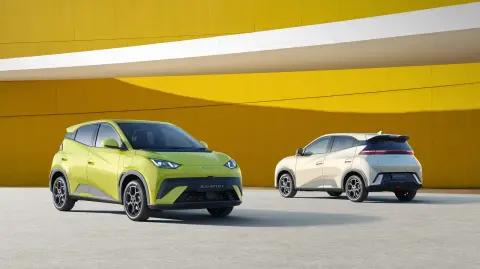
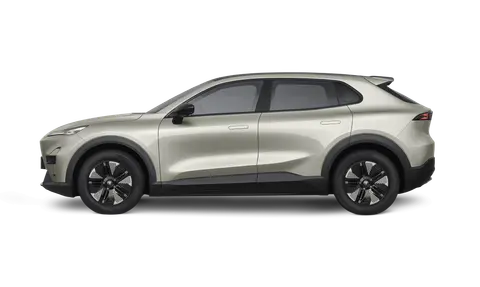
To see where today's prices have settled, use our electric car price list or the best EVs under Rs 40 lakh.
Cars imported before the budget
Artha Kendra reported on 3 June 2026 (20 Jestha 2083) that the government amended the Finance Bill so that EVs imported and cleared through customs before the budget, which had already paid excise and other taxes at the border but were not yet registered, do not pay the new CIIF at registration.
Electric scooters and motorcycles
The value-based bands apply only to electric cars. For electric two-wheelers, the bill text shows:
- a flat road construction fee of Rs 10,000 per vehicle;
- no excise duty;
- a single CIIF rate, which in the copy we read appears to be 2.5%. Because the text is unclear, we treat it as unconfirmed.
We could not confirm the customs duty on e-two-wheelers, which the bill did not change. If you are shopping for one, see our petrol vs electric two-wheeler guide.
Hybrids are not in the EV system
Hybrids and plug-in hybrids are not covered by the CIIF. They remain under the excise system, so the changes above do not apply to them.
What this means if you are buying now
- Ask which band the car falls in. A dealer cannot change the law, but they know the declared value. Cars close to Rs 20 lakh or Rs 40 lakh CIF are the most exposed to price jumps.
- Get the price in writing, with its validity date. An exchange-rate move can change the band before your car clears customs.
- Compare the full price, not the tax headline. Add registration, number plate and insurance; see our guide to road tax and insurance.
- Running costs still favour EVs. Higher import tax does not change the electricity-versus-petrol saving. See EV vs petrol: the real 5-year cost.
We will update this page when the Gazette text of the Finance Act 2083 or a Customs Department notice confirms or changes any rate.
स्रोतहरू
- Ministry of Finance – Budget FY 2083/84 page (budget speech and Finance Bill 2083)
- Finance Bill 2083 (as tabled) – unofficial text copy of the MoF PDF
- The Kathmandu Post – Revised tax slabs threaten EV boom in Nepal (1 June 2026)
- Karobar Daily – EV tax under the FY 2083/84 budget (18 Jestha 2083)
- Arthikpati – Ministry of Finance clarification on the new EV tax policy (31 May 2026)
- Artha Kendra – No clean infrastructure investment fee on EVs imported before the budget (20 Jestha 2083 / 3 June 2026)
- myRepublica – EV prices likely to go up with revised tax rates in budget for FY 2024/25 (May 2024)
- The Kathmandu Post – Government keeps taxes on electric vehicles unchanged for FY 2025–26 (29 May 2025)
#ev#tax#budget-2026-27#customs#electric-cars