WLTP, CLTC or NEDC? Why EV range claims differ, and what to expect in Nepal
Wheels of Nepal · Last updated: · 8 min read
Range figures differ because carmakers measure them on different laboratory tests: WLTP (Europe and much of the world), CLTC (China), NEDC (Europe's old test) and MIDC (India). WLTP is the strictest of the four, and on official Nepal figures a WLTP range comes out at roughly 0.8 times the CLTC or NEDC number for the same car. Real trips in Nepal can fall below even that.
You can see this on Nepali distributors' own sites. MG Nepal lists the MG S5 EV at 340 km WLTP and 415 km NEDC. Wuling Nepal lists the Eksion at 440 km WLTP and 530 km CLTC. Same car, same battery, about 80–90 km apart, and nobody is lying. The tests are simply different.
The four tests in plain words
Every range figure comes from a car driven on rollers in a lab, following a fixed speed-and-time pattern called a driving cycle. The car repeats it until the battery runs out. A gentler cycle means a bigger number.
| Test | Who uses it | Length | Average speed | Top speed |
|---|---|---|---|---|
| NEDC | Europe until 2017; still quoted by some brands | 1,180 s, 10.9 km | 33.4 km/h | 120 km/h |
| WLTP (WLTC class 3b) | Europe since 2017, many other markets | 1,800 s, 23.3 km | about 46.5 km/h | 131.3 km/h |
| CLTC-P | China, since the 2019 national standard | 1,800 s, 14.5 km | 29.0 km/h | 114 km/h |
| MIDC | India (ARAI certification) | based on NEDC | not stated here | 90 km/h |
Figures from DieselNet's cycle data (NEDC, WLTC and CLTC) and Down To Earth (MIDC). WLTC's average speed is our arithmetic: 23.27 km in 1,800 s, stops included.
- NEDC is the old European test, shorter and slower than WLTP (see the table). The EU's Joint Research Centre notes that WLTP entered European type approval from September 2017.
- WLTP is longer and faster, with a high-speed phase that peaks above 130 km/h. That is why it gives lower range figures.
- CLTC was developed by the China Automotive Technology and Research Center (CATARC) and set out in standard GB/T 38146.1-2019. DieselNet notes its low average speed and frequent stop-start driving. Low-speed, stop-start driving suits electric cars, because regenerative braking recovers energy each time the car slows. The US Department of Energy's figures show this recovery is far larger in city driving than on the highway.
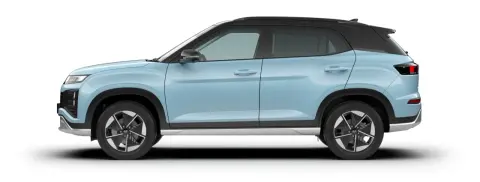
- MIDC is India's test. The range method sits in ARAI's AIS-040 standard. Researchers at IIT Kanpur, writing in Down To Earth, describe MIDC as equivalent to the NEDC, with a top speed of just 90 km/h. EVs in Nepal that quote MIDC include the Hyundai Creta Electric and Mahindra BE 6.
India should shift to WLTP.
What Nepal's EV sellers quote
We record the test name next to every range figure in our catalogue. Across the 89 electric car variants with a published range in October 2026, this is what the official Nepal sites use:
- WLTP 48.3%
- No test named 28.1%
- MIDC / ARAI (India) 10.1%
- NEDC 9%
- CLTC 4.5%
| WLTP | 43 variants |
|---|---|
| No test named | 25 variants |
| MIDC / ARAI (India) | 9 variants |
| NEDC | 8 variants |
| CLTC | 4 variants |
Source: Wheels of Nepal catalogue, from official Nepal distributor sites, October 2026 (89 variants with a range figure)
Almost half quote WLTP. More than a quarter quote a range with no test named at all. Where we cannot tell, our model pages say "brand claim".
Putting them on one scale
At least five vehicles on Nepali distributor sites carry two official figures for the same version. That lets us see the gap directly:
| Vehicle (official Nepal site) | WLTP | Other figure | WLTP as % of other |
|---|---|---|---|
| MG S5 EV 49 kWh | 340 km | 415 km NEDC | 82% |
| MG S5 EV 62 kWh | 430 km | 515 km NEDC | 83% |
| Foton Lowroof EV van | 255 km | 300 km NEDC | 85% |
| Wuling Eksion | 440 km | 530 km CLTC | 83% |
| Wuling Darion | 445 km | 540 km CLTC | 82% |
| MG S5 EV 49 kWh (NEDC) | 82 % |
|---|---|
| MG S5 EV 62 kWh (NEDC) | 83 % |
| Foton Lowroof EV (NEDC) | 85 % |
| Wuling Eksion (CLTC) | 83 % |
| Wuling Darion (CLTC) | 82 % |
Source: Official MG, Foton and Wuling Nepal model pages, October 2026; our arithmetic
The pattern is steady, and it agrees with the EU Joint Research Centre. When Europe moved from NEDC to WLTP, the JRC found pure-electric range came out at about 0.8 times the NEDC figure. So a simple rule of thumb is:
WLTP-like range ≈ NEDC or CLTC figure × 0.8
For CLTC we have only two Nepal pairs, both from Wuling, so treat the rule as rough. Here it is applied to EVs in our catalogue that quote only NEDC or CLTC:
| Model | Official figure | Rough WLTP-like estimate (×0.8) |
|---|---|---|
| Deepal S05 | 470 km NEDC | about 376 km |
| Changan Nevo Q05 | 462 km NEDC | about 370 km |
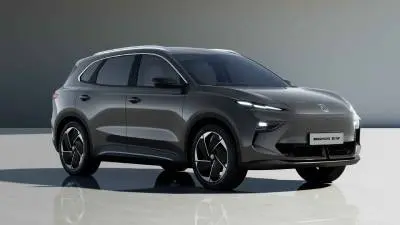
| Kaiyi X3 Pro EV | 370 km NEDC | about 296 km |
| Dongfeng Nammi Box E2 430 | 430 km CLTC | about 344 km |
| Wuling Mini EV Long Range | 301 km CLTC | about 241 km |
These estimates are ours, not the makers'. Use them only to compare cars fairly. Do not treat them as a promise. For MIDC, Down To Earth's description suggests treating it like NEDC, but no Nepal page gives a MIDC and WLTP figure for the same car, so we have not converted those.
Why real trips fall short of any lab figure
Even WLTP is a lab test at a mild temperature. On the road, several things use extra energy:
- Cold. The US Department of Energy, citing a 2019 AAA study, says EV range can drop by about 41% at −7°C (20°F) with the cabin heater on, and about 12% with the heater off. Most of the extra energy goes on heating the cabin. Kathmandu rarely gets that cold, but winter mornings in the hills can come closer.
- Heat and air-conditioning. The same source says air-conditioning can hurt EVs more, in percentage terms, than petrol cars.
- Speed. WLTP's fastest phase averages about 92 km/h and lasts under six minutes (323 seconds). Long stretches at sustained high speed use more energy per km than the test assumes.
- Hills and load. Climbing a pass with five people and luggage takes far more energy than the flat lab rollers. Regenerative braking wins some back on the way down, but not all.
Some of these work in Nepal's favour. Slow valley traffic resembles the low-speed city phases where EVs are most efficient.
How to plan with a range figure
- Start from WLTP, or the ×0.8 estimate if the car only quotes NEDC or CLTC.
- Keep a margin for hills, air-conditioning or heating, and a detour. Do not plan to arrive with an empty battery.
- Know where you can charge on the way. Our EV charging guide covers NEA and private chargers on the highways.
- Pre-cool or pre-heat while plugged in. The Department of Energy recommends this to save battery energy for driving.
- Track your own figure. After a month, divide the km you drove by the units you charged. That is your real efficiency, and the best guide to your range.
Cars with WLTP figures are the easiest to compare like for like:
 MGS5 EVRs 43.99 lakh – Rs 55.99 lakh
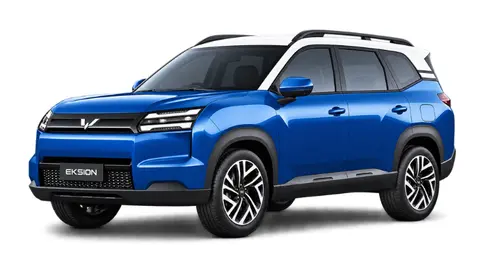 Wuling EksionRs 57.99 lakh
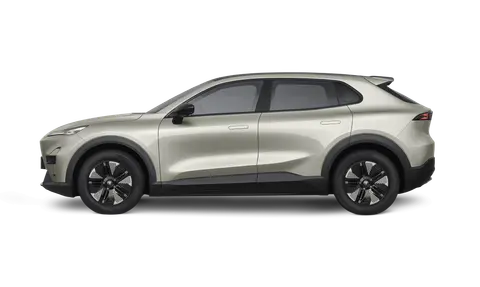 Deepal S05Rs 57.99 lakh – Rs 62.99 lakh
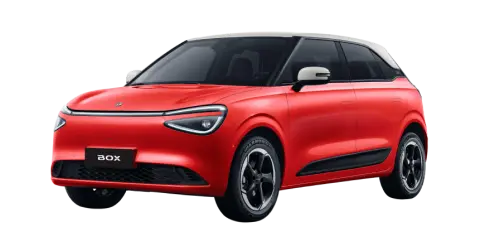 Dongfeng Nammi BoxRs 30.99 lakh – Rs 32.99 lakh
For worked examples, read our comparisons of the Geely Galaxy EX5 and Deepal S05 (WLTP against NEDC) and the Hyundai Creta Electric and BYD Atto 3 (MIDC against WLTP). Or browse every model with its test named on the electric car price list. Running cost is a separate question; see EV vs petrol: the 5-year cost.
Sources
- DieselNet – China Light-Duty Vehicle Test Cycle (CLTC)
- DieselNet – Worldwide harmonized Light vehicles Test Procedure (WLTP)
- DieselNet – ECE 15 + EUDC / NEDC
- European Commission Joint Research Centre – From NEDC to WLTP: effect on the type-approval CO2 emissions of light-duty vehicles (2017)
- ARAI – AIS-040 (Rev. 1): Electric power train vehicles, method of measuring the range
- Down To Earth – Measuring emissions from vehicles in the real world: policy steps in India (R. Singh and M. Sharma, IIT Kanpur, 10 January 2022)
- US Department of Energy (fueleconomy.gov) – Fuel economy in cold weather (EV estimates from a 2019 AAA study)
- US Department of Energy (fueleconomy.gov) – Fuel economy in hot weather
- US Department of Energy (fueleconomy.gov) – Where the energy goes: electric cars
- MG Motors Nepal – MG S5 EV (WLTP and NEDC range)
- Wuling Nepal – Eksion (CLTC and WLTP range)
- Wuling Nepal – Darion (CLTC and WLTP range)
- Foton Nepal – Lowroof EV (NEDC and WLTP range)
- Laxmi Intercontinental (Hyundai Nepal) – Creta Electric specification (MIDC range)
- Changan Nepal (MAW Vriddhi) – Deepal S05 specification (NEDC range)
#ev#range#wltp#cltc#nedc#buying-guide