Registering a new car or bike in Nepal: from dealer invoice to bluebook and number plate
Wheels of Nepal · Last updated: · 8 min read
In Nepal a new vehicle must be registered at a transport management office before it can be driven, and the dealer handles most of the work: it brings the import papers and the vehicle for inspection, and the vehicle is then transferred into your name. You pay for third-party insurance, the first year's provincial tax and the embossed number plate, and you should check every line of the bluebook before you leave.
Buying your first vehicle is exciting, and the paperwork that follows is easy to ignore. This guide walks through what happens between paying the dealer and riding away with a bluebook and number plate, and what it costs. For the yearly routine after that, see our bluebook renewal, road tax and insurance guide.
The law in one paragraph
Nepal's Motor Vehicles and Transport Management Act 2049 says no one may drive a motor vehicle on the road without registering it. It also requires whoever imports or sells the vehicle to have it registered with the authority within 15 days of bringing it into Nepal, after paying customs duty. Registration produces the bluebook (the registration certificate) and the registration number on your plate.
Step by step
| Step | Who does it | What you need or pay |
|---|---|---|
| 1. Book and pay | You and the dealer | Quotation, booking, final payment; tax invoice from the dealer |
| 2. Finance, if any | You and the bank | Loan approval; the bank pays the dealer the financed part |
| 3. Insurance | You or the dealer | At least third-party cover |
| 4. Registration and inspection | Dealer, at the transport office | Customs papers, invoice, the vehicle itself |
| 5. First naamsari into your name | Dealer or your representative | Your ID, photo, power of attorney if you do not go |
| 6. Tax and number plate | You | First year's provincial tax; embossed plate fee |
| 7. Bluebook check | You | Read every detail before you leave |
1. Book and pay
Get a written quotation showing the exact model, variant, colour and price, then the final tax invoice (VAT bill) when you pay. The ex-showroom price on the invoice is not the whole cost: registration, insurance, tax and the plate come on top. Ask the dealer for an itemised quote.
2. Finance
If you take a loan, the bank pays the dealer the financed part, which can be at most 60% of the price for a private vehicle. Nepal Bank, for example, lends up to 60% of the dealer's quotation. Until you repay, the lender's name usually appears on the bluebook; when you finish, get a release letter and have the record cleared. See our auto loan guide or the bike and scooter loan guide.
3. Insurance
Third-party insurance is compulsory for every vehicle. Under the current tariff, reported by Bizmandu, a motorcycle or scooter pays Rs 1,500 below 150cc, Rs 1,700 for 150–250cc and Rs 1,900 above 250cc. For private cars the Insurance Authority's directive sets the third-party part at Rs 3,000 below 1,000cc, Rs 4,000 for 1,000–1,600cc and Rs 6,000 above 1,600cc. These exclude VAT and stamp duty, and premiums are being revised after the cover limit doubled to Rs 10 lakh, so check the current price.
If you have a loan, the bank will usually ask for comprehensive cover, which also pays for damage to your own vehicle.
4. Registration and inspection
For an imported vehicle, registration rests on the customs declaration from import. Himal Press reported in 2023 that this had been mandatory for all vehicle registrations until the government let locally assembled vehicles use a VAT invoice and excise clearance instead. Your dealer holds these papers, so you do not need to chase them, but make sure the chassis and engine numbers on the invoice match the vehicle.
The dealer takes the vehicle to the transport office for inspection when it is registered.
5. First naamsari into your name
Reports of the October 2026 amendment describe a first naamsari, the first transfer of a new vehicle into the buyer's name. Under DoTM's amended Transport Management Procedure Directive 2060, reported by Onlinekhabar and Ratopati on 12 October 2026:
- You no longer have to appear in person. A representative can complete registration and naamsari with your power of attorney, the representative's own original government ID, your photo and your original ID.
- No second inspection. For the first naamsari, the inspection done when the dealer registered the vehicle is accepted.
- Insurance can be bought or renewed without visiting the office.
- DoTM will give dealers access to the Vehicle Registration System (VRS) so that biometric details can be collected through a single window.
The reports gave no start date for every office, so ask your dealer how your office is applying the changes.
6. First-year tax and the number plate
Annual vehicle tax is set by each province, by engine size or motor power. Ratopati's comparison of FY 2083/84 rates gives:
| Vehicle (private) | Yearly tax range across provinces |
|---|---|
| Motorcycle or scooter up to 125cc | Rs 2,700 to Rs 3,100 |
| Car up to 1,000cc | Rs 21,000 to Rs 23,000 |
| Electric car up to 50 kW | Rs 2,500 to Rs 11,000 |
| Electric car 51–125 kW | Rs 7,500 to Rs 17,000 |
In Bagmati, the Economic Bill 2083 says tax on imported vehicles that have been in Nepal for less than a year is adjusted proportionately, based on the technical inspection report, according to Fiscal Nepal. So you may pay less than a full year at first. Ask the counter how your amount was worked out.
The embossed number plate is issued during registration, ownership transfer and renewal, according to The Kathmandu Post. The fees are:
| Motorcycle or scooter | 2,500 Rs |
|---|---|
| Car, jeep, van or tractor | 3,200 Rs |
| Heavy vehicle | 3,600 Rs |
Source: Department of Transport Management fees, as reported by The Kathmandu Post (26 August 2025)
The registration (darta) fee itself is not published in any official source or news report we could check, so we have not printed one. Ask the dealer for an itemised list of every government fee it collects from you, with receipts.
7. Check the bluebook
Before you ride away, read the bluebook line by line:
- Your name, citizenship number and address
- Registration number, and that it matches the plate
- Chassis and engine numbers, digit by digit against the vehicle
- Engine size (cc) or motor power (kW), which sets your yearly tax band
- Model, colour and year
- Any bank's name, if you took a loan
A typo is much easier to fix now than when you sell. Keep a photo of every page and of your insurance policy on your phone.
What it costs: the known items
Example, our arithmetic: the items we could confirm for two typical first vehicles. Tax is shown as the provincial range; first-year tax may be pro-rata.
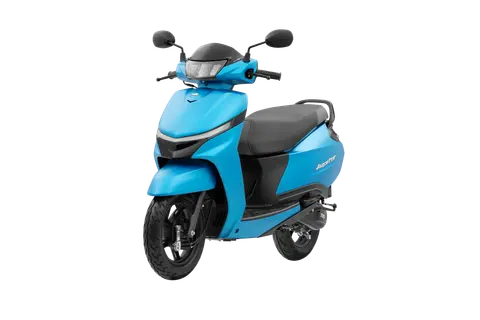
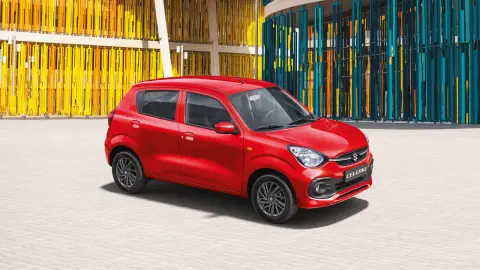
| Item | TVS Jupiter (113cc scooter) | Suzuki Celerio (998cc car) |
|---|---|---|
| Indicative ex-showroom price (official site, Oct 2026) | Rs 2,64,900 | Rs 31,99,000 |
| Embossed number plate | Rs 2,500 | Rs 3,200 |
| Third-party insurance (before VAT) | Rs 1,500 | Rs 3,000 |
| Annual vehicle tax | Rs 2,700–3,100 | Rs 21,000–23,000 |
| Registration fee | not published | not published |
Before you collect the vehicle
- Ask for an itemised receipt of every fee the dealer collects for registration, plate, tax and insurance.
- Match the chassis and engine numbers on the invoice, insurance and bluebook to the vehicle.
- Keep the warranty booklet and service book from day one; many warranties require dealer servicing.
- Note your tax due date. It follows your bluebook date, and late payment adds fines.
- Carry your bluebook, insurance papers and driving licence whenever you ride or drive. No licence yet? See how to get a driving licence in Nepal.
If you are still choosing, our first-time car buyer's guide and the scooter price list are good places to start.
Sources
- Nepal Law Commission – Motor Vehicles and Transport Management Act 2049, Chapter 3: registration of motor vehicles (English text)
- Onlinekhabar – DoTM: owners need not be present for new or used vehicle purchase, naamsari, insurance or renewal (26 Asoj 2083)
- Ratopati – DoTM amends Transport Management Procedure Directive 2060 (12 October 2026)
- Ekantipur – Vehicle owners no longer required to be present for registration and ownership transfer (12 October 2026)
- Himal Press – Govt paves the way for registration of motor vehicles made in Nepal (27 April 2023)
- The Kathmandu Post – Government pushes ahead with embossed number plates (26 August 2025)
- Bizmandu – Third-party motor insurance liability doubled; premiums under revision (8 July 2026)
- Nepal Insurance Authority – Motor Insurance Premium Rate Directive 2066 (as amended), third-party rates for private cars
- Ratopati – In which province is the annual vehicle tax cheaper? (3 Shrawan 2083, FY 2083/84 rates)
- Fiscal Nepal – Bagmati Economic Bill 2083: online tax through VRS, pro-rata tax for new imports (30 June 2026)
- Prabhu Insurance – Motor insurance (third-party liability is compulsory)
- Business 360 – Monetary policy mid-term review: vehicle loan ratio set at 60% (26 February 2025)
- Nepal Bank Limited – Auto loan (up to 60% of the quotation price)
#registration#bluebook#number-plate#naamsari#dotm#insurance#first-time-buyer