How to get a driving licence in Nepal (2026): online form, written test, trial and fees
Wheels of Nepal · Last updated: · 8 min read
To get a driving licence in Nepal in 2026, fill in the form on your province's EDLVRS portal using your National ID number and a mobile number in your own name, complete the health check, pass a 25-question written test and a 100-mark trial (70 marks to pass in Bagmati), then pay the licence fee. In Bagmati and Gandaki that fee is now Rs 3,000 for a bike or scooter and Rs 4,000 for a car, plus a Rs 1,000 application fee.
The system changed a lot in 2026. Licence services moved from one national website to seven provincial portals, the National ID became compulsory, and several provinces doubled their fees. This guide follows the order you will actually go through, and it marks clearly the places where rules differ by province or where the latest official figure is not published. Government websites were hard to reach while we researched this, so many details come from news reports. Check your local Transport Management Office (यातायात व्यवस्था कार्यालय) before you pay.
Which licence category do you need?
Licences are issued by category. The ones most people need are:
| Category | Vehicles |
|---|---|
| A | Motorcycles and scooters |
| K | Scooters only |
| B | Cars, jeeps and vans |
| C | Tempos and auto-rickshaws |
| D | Power tillers |
Heavier categories (E to J) cover tractors, minibuses, trucks, buses and construction machines. You can add a category to an existing licence later for a fee.
Minimum age. Under the current law, Bizmandu reports, a two-wheeler licence can be issued from age 16 and a car licence from 18. A draft new transport law would raise these to 18 for two-wheelers and 21 for cars, but it was still a draft in April 2026.
Step 1: Get your National ID number ready
Since 1 Shrawan 2083, you need three things before you can even open the form, Ratopati reports:
- your National ID number (राष्ट्रिय परिचयपत्र नम्बर),
- a mobile number registered in your own name, and
- an email address (applicants abroad can receive the one-time code by email).
You do not need the physical ID card, only the number. If you do not have one, register at your District Administration Office first; without the number the new system will not let you continue.
You don't need the card at all to fill the form.
Step 2: Fill in the online form on your province's portal
Each province runs its own portal. These are the addresses Ratopati published:
| Province | Portal |
|---|---|
| Koshi | edlvrs.koshi.gov.np |
| Madhesh | edlvrs.madhesh.gov.np |
| Bagmati | edlvrs.bagamati.gov.np |
| Gandaki | edlvrs.gandaki.gov.np |
| Lumbini | edlvrs.lumbini.gov.np |
| Karnali | edlvrs.karnali.gov.np |
| Sudurpashchim | edlvrs.sudurpashchim.gov.np |
The system is linked to the Nagarik App and the National ID database, so many of your details fill in automatically. Choose the category, the office and the date offered, then keep the confirmation the portal gives you.
Step 3: Health check and office visit
A medical check (including eyesight) is part of every application. Karobar Daily reports that under the new system you can have the check done by a nearby doctor and upload the scanned report. Bagmati is an exception: because of a Supreme Court interim order, the check there must still be done by a doctor registered with the designated office.
You still need to go to the transport office for the tests, and to have your photo, signature and fingerprints taken if your office asks for them. Take your citizenship certificate, your application confirmation and any receipt.
Step 4: The written test (likhit)
According to the Bagmati directive reported by Setopati, the written test has 25 multiple-choice questions worth 4 marks each (100 marks), and lasts 30 minutes. Offices may run it on computers. The questions cover transport law, traffic rules and basic vehicle knowledge. The Department of Transport Management publishes its question bank, which Onlinekhabar reported in 2021 held 500 questions.
The pass mark is set in each province's directive and we could not confirm a current figure for every province, so check it on your admit card or at your office. Prepare by working through the official question bank, not just mock tests from apps.
Step 5: The trial (practical test)
The trial tests real control of the vehicle. In Bagmati it has been scored out of 100 since Falgun 2079, and you need 70 marks to pass. Before that, a single mistake meant failure. This is how Setopati reported the marks for a two-wheeler trial:
- Figure of eight 20%
- Uphill 20%
- Traffic signals 15%
- Bumps (uneven road) 15%
- Narrow plank 10%
- U-turn 10%
- Overall behaviour 10%
| Figure of eight | 20 marks |
|---|---|
| Uphill | 20 marks |
| Traffic signals | 15 marks |
| Bumps (uneven road) | 15 marks |
| Narrow plank | 10 marks |
| U-turn | 10 marks |
| Overall behaviour | 10 marks |
Source: Setopati, Falgun 2079 (Bagmati Province trial directive)
Marks are lost for specific mistakes, for example:
| Mistake | Marks lost |
|---|---|
| Ignoring a traffic signal | 15 |
| No indicator on the U-turn | 10 |
| Touching the line in the figure of eight (each time) | 5 |
| Putting a foot down (each time) | 5 |
| Engine stalling (each time) | 5 |
| Riding with the helmet unlocked | 4 |
| Not checking brakes, tyres and mirrors first | 3 |
Two practical points from the same directive: candidates use the vehicle assigned by the office, and two-wheeler trials are done on petrol motorcycles and scooters. If you have only ridden an electric scooter, practise with a clutch-free petrol scooter or, for category A, a geared motorcycle before the test.
If you fail. Under the rules Onlinekhabar described in 2020, you could retake a failed trial after 30 days, and re-apply 90 days after failing the written test; failing the trial three times meant starting again. Provinces may have changed these periods, so ask your office.
Step 6: Pay the fee and collect your licence
Licence fees are now set by each province. Bagmati (in its Economic Bill 2083) and Gandaki both doubled theirs for FY 2083/84:
| Fee | Before | FY 2083/84 (Bagmati and Gandaki) |
|---|---|---|
| Application (any category) | Rs 500 | Rs 1,000 |
| New licence or renewal, A/K (bike, scooter) | Rs 1,500 | Rs 3,000 |
| New licence or renewal, B (car, jeep, van) | Rs 2,000 | Rs 4,000 |
| Adding a category (A to F) | Rs 500 | Rs 1,000 |
| Heavy vehicles (G to J) | Rs 3,000 | Rs 6,000 |
Our arithmetic: in Bagmati or Gandaki, the government fees for a first scooter or bike licence add up to Rs 1,000 + Rs 3,000 = Rs 4,000, and for a car licence Rs 1,000 + Rs 4,000 = Rs 5,000. That excludes the doctor's fee, photos and any separate charge your office makes for the tests. Other provinces set their own rates; we could not confirm every province's current figures from official sources.
Licences are printed centrally by the Security Printing Centre and sent by post to the transport office, Karobar Daily reports, and printing for some provinces restarted on the new system in September 2026. Ask your office how it will tell you that the card is ready.
Validity. Since the 2025 amendment to the Motor Vehicles and Transport Management Act, a new or renewed licence is valid for 10 years instead of five (myRepublica).
After the licence: choosing your first vehicle
A new licence usually means a first vehicle. Our first-time car buyer's guide covers budgets and segments, and petrol vs electric two-wheelers helps with the scooter choice. Once you own one, the bluebook renewal and road tax guide explains the yearly paperwork. Some popular first vehicles in our catalogue:
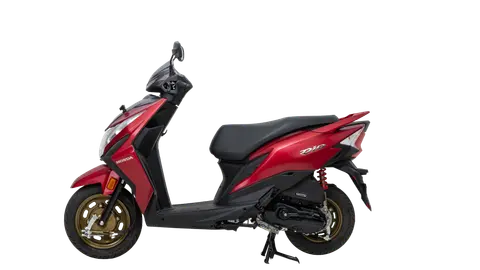 Honda Dio 110Rs 2,69,900 – Rs 2,84,900
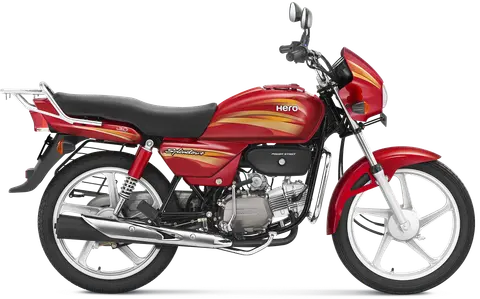 Hero Splendor+Rs 2,17,900
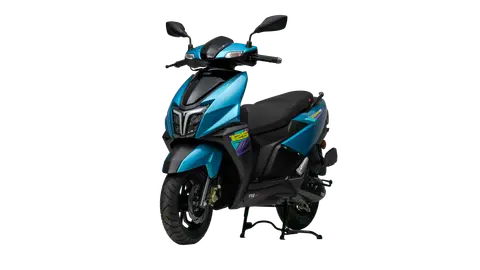 TVS Ntorq 125Rs 2,93,900 – Rs 3,34,900
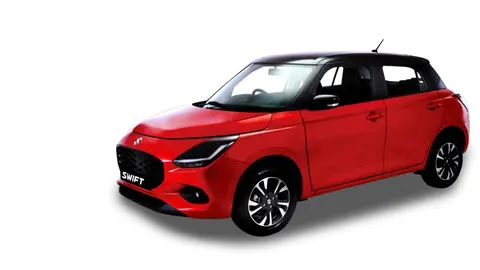 Suzuki Epic SwiftRs 38.99 lakh – Rs 52.29 lakh
Compare running costs with the EV vs petrol calculator, or browse all scooter prices and bike prices.
Quick checklist
- National ID number, own mobile number and email
- Citizenship certificate (original and copy)
- Health and eye check report (uploaded, or at the designated doctor in Bagmati)
- Application confirmation from your province's EDLVRS portal
- Fees: application, then licence fee after you pass
- A few hours of practice on the trial layout: figure of eight, narrow plank, slope and bumps
Sources
- Ratopati – New arrangement in the licence system: National ID and own mobile number mandatory to fill the form (26 Shrawan 2083), with the seven provincial EDLVRS portal addresses
- Karobar Daily – Licence renewed online, 2.5 lakh people benefit (5 Asoj 2083): EDLVRS, health check upload, printing by Security Printing Centre
- myRepublica – Driver's licence now valid for 10 years (1 August 2025)
- Bajarko Chirfar English – Bagmati Province doubles driving licence fees for all categories (30 June 2026)
- Onlinekhabar – Vehicle licence and land revenue fees increased in Gandaki (Asar 2083)
- Setopati – 70-mark trial pass system applied in Bagmati from today (Falgun 2079): written test format and trial marks
- Onlinekhabar – The question bank for the driving licence written test (Asar 2078)
- Onlinekhabar English – How to get a driving licence in Nepal? (21 November 2020): categories, office steps, retake rules
- Bizmandu – Draft transport law: licence only after 18, lower late-renewal fines (8 Baisakh 2083)
#driving-licence#dotm#ownership#first-time-buyers#two-wheelers#cars