First-time car buyer's guide for Nepal: budget, segment and checklist
Wheels of Nepal · Last updated: · 9 min read
Budget for the full cost, not just the showroom price: banks may lend at most 60% of a private car's value, so plan on at least 40% down, then add the number plate, registration, yearly tax, insurance and running costs before you choose a car.
Your first car is a big purchase, and in Nepal it is easy to underestimate the total. The showroom price is only the start: there is the bank's down payment rule, yearly tax, insurance, fuel or electricity, and servicing. This guide walks through the decision in three stages: set a realistic budget, choose the right type of car, then test drive and complete the paperwork without surprises.
Step 1: Set a budget you can live with
Ex-showroom price and what comes on top
The price you see on a brand's website is the ex-showroom price. For a new car sold by the official distributor, the import duties and VAT are already built into this figure. What it usually does not include is the cost of getting the car legally on the road and keeping it there:
- Number plate. Embossed plates cost Rs 3,200 for cars, jeeps and vans, according to The Kathmandu Post's report on the government's plate rules.
- Registration and bluebook. Paid at the transport office (dealers often handle this for you). Ask the dealer for the exact amount in writing; we could not confirm a current official fee schedule.
- Annual vehicle tax. Set by your province, and the rates differ. For a small car up to 1,000 cc, Ratopati's July 2026 comparison of FY 2026/27 rates found Rs 21,000 a year in Karnali and Sudurpashchim and Rs 23,000 in Koshi, the highest; check your own province's rate at the transport office. For private EVs in Bagmati, Techpana reported the FY 2026/27 rates as Rs 6,500 a year up to 50 kW (Fiscal Nepal reported this was a Rs 1,500 increase) and Rs 15,000 between 50 and 125 kW.
- Insurance. Third-party insurance is compulsory. The FY 2026/27 budget raised the third-party cover from Rs 5 lakh to Rs 10 lakh, and the Insurance Authority is revising premiums, so get a current quote. Many buyers choose comprehensive cover for a new car, and if you take a loan, ask whether your bank requires it; it costs more than third-party cover.
- Accessories. Mats, a seat cover or a dash camera add up. Decide what you actually need before you get to the showroom.
Read bluebook renewal, road tax and insurance for the yearly side of ownership.
How much the bank will lend
Nepal Rastra Bank caps loans for private vehicles at 60% of the vehicle's value, for petrol, diesel and electric alike. That rule came in with the February 2025 mid-term review of monetary policy. The FY 2026/27 monetary policy, announced in July 2026, eased the loan-to-value ratio only for large electric vehicles used as public transport, according to The Rising Nepal; we found no reported change for private cars, but confirm the current limit with your bank. In practice, plan for at least 40% as a down payment from your own savings.
Interest rates change often, so compare banks. As one real example, Nepal Bank's rate sheet effective Kartik 1, 2083 lists a fixed private-vehicle loan at 7.99% a year for five years and 8.50% for seven years, and floating rates of base rate plus 0.49 to 2.49 percentage points. Other banks and offers will differ.
Worked example (illustration only). Suppose the car costs Rs 30 lakh.
| Item | Amount |
|---|---|
| Car price | Rs 30,00,000 |
| Down payment (40%) | Rs 12,00,000 |
| Loan (60%) | Rs 18,00,000 |
| EMI at 7.99% fixed, 5 years | about Rs 36,489 a month |
| Total interest over 5 years | about Rs 3.89 lakh |
| EMI at 8.50% fixed, 7 years | about Rs 28,506 a month |
| Total interest over 7 years | about Rs 5.94 lakh |
| 5 years at 7.99% (EMI about Rs 36,489) | 3.89 lakh |
|---|---|
| 7 years at 8.50% (EMI about Rs 28,506) | 5.94 lakh |
Source: Our worked example above, using Nepal Bank's fixed private-vehicle rates (effective Kartik 1, 2083); illustration only
The longer loan lowers the monthly payment but costs about Rs 2 lakh more in interest. Try your own numbers in the EMI calculator, and see our auto loan guide for how banks assess you.
A common rule of thumb is to keep the EMI plus running costs to a comfortable share of your take-home pay, with savings left for emergencies. Only you can judge that line, but it is worth working out before the showroom visit, not after.
Running cost
Work out a monthly figure from your own driving:
- Petrol car: litres per month = km per month ÷ real mileage (km per litre). Multiply by today's pump price from Nepal Oil Corporation. For example, at 1,000 km a month and the 25.75 km/l Suzuki claims for the Swift, you would use about 39 litres. Real-world mileage in city traffic is usually lower than the claim.
- Electric car: units per month = km per month × energy use per km. The BYD ATTO 1 Dynamic has a 30.08 kWh battery and a claimed 230 km range, which works out to about 0.13 kWh per km. At 1,000 km a month that is about 131 units; at NEA's Rs 9.50 domestic rate, roughly Rs 1,240 before VAT and charging losses. Real range is usually lower than the claim, so treat this as a best case.
Add servicing, tyres and parking. Our EV vs petrol cost calculator compares both over five years.
Step 2: Choose the right segment
Hatchback, sedan or SUV?
| Type | Good for | Trade-offs | Examples in our catalogue (from) |
|---|---|---|---|
| Hatchback | City driving, tight parking, lowest running cost | Smaller boot, less ground clearance | Suzuki Alto K10 Rs 28.24 lakh; Hyundai Grand i10 Nios Rs 33.56 lakh |
| Sedan | Comfort on highways, bigger boot | Lower ground clearance on rough roads | Honda Amaze Rs 46.79 lakh |
| Compact SUV | Higher seating, better clearance for broken roads | Usually costs and weighs more than a hatchback | Nissan Magnite Rs 35.75 lakh |
| Electric hatchback | Low running cost in cities, quiet | Range planning, charging access | Kaiyi e-Qute 04 Rs 25.96 lakh; BYD ATTO 1 Rs 30.75 lakh |
Prices are indicative ex-showroom prices on the official sites (checked October 2026), for the cheapest listed variant.
| Kaiyi e-Qute 04 (EV) | 25.96 lakh |
|---|---|
| Suzuki Alto K10 | 28.24 lakh |
| BYD ATTO 1 (EV) | 30.75 lakh |
| Hyundai Grand i10 Nios | 33.56 lakh |
| Nissan Magnite | 35.75 lakh |
| Honda Amaze | 46.79 lakh |
Source: Indicative ex-showroom prices on the official sites (Suzuki, Hyundai, Honda, Nissan, Kaiyi, Cimex), October 2026
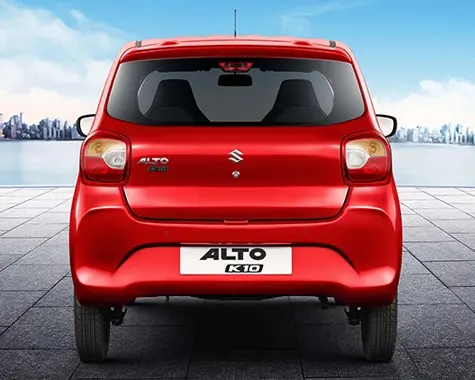 Suzuki Alto K10Rs 28.24 lakh – Rs 35.74 lakh
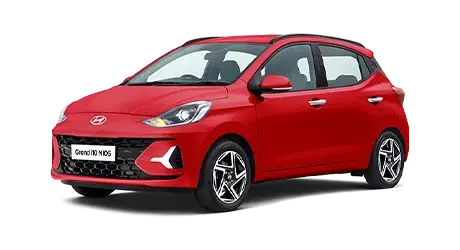 Hyundai Grand i10 NiosRs 33.56 lakh – Rs 41.26 lakh
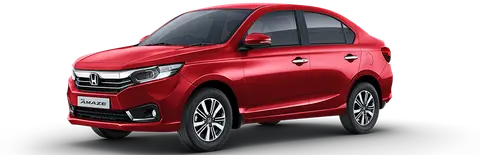 Honda AmazeRs 46.79 lakh – Rs 57.75 lakh
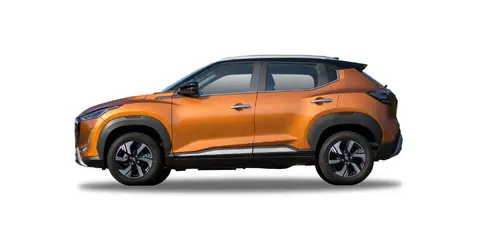 Nissan MagniteRs 35.75 lakh – Rs 53.99 lakh
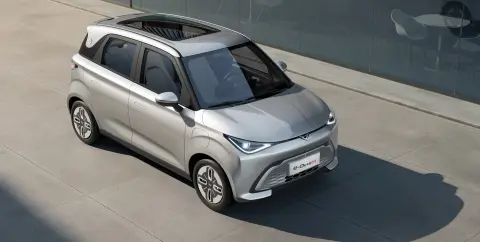 Kaiyi e-Qute 04Rs 25.96 lakh
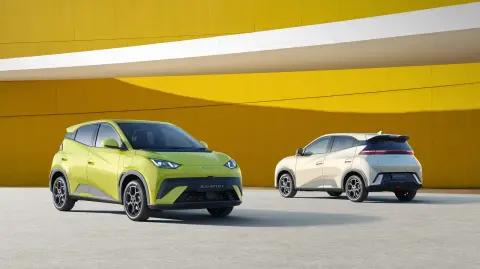 BYD ATTO 1Rs 30.75 lakh – Rs 34.8 lakh
Ask yourself honestly how often you leave the city, how many people usually ride with you, and where you will park. If nearly all your driving is in the city, you may not need to pay extra for an SUV's clearance; if you regularly drive rough village roads, a low hatchback may be a struggle. Browse the car price list to see what fits your budget.
Electric or petrol?
An EV makes most sense if you can charge at home, mostly drive within a predictable range, and want low running costs. Home charging is billed on NEA's normal domestic tariff, and our EV charging guide explains the meter and costs. Note that tax on electric cars changed in the FY 2026/27 budget to depend on the car's import value, so EV prices have moved; see Nepal's FY 2026/27 EV tax changes.
A petrol car may suit you better if you cannot charge where you live, regularly drive long hilly routes far from chargers, or want the widest choice of workshops in smaller towns.
Step 3: Test drive and paperwork
Test drive checklist
Book a test drive on roads like the ones you drive every day, and bring the person who will share the car.
- Seating position: can you see clearly over the bonnet and in the mirrors?
- Climb a steep road and stop on it: does the car hold and pull away smoothly?
- Drive over a speed bump and a rough patch: listen for knocks and check the clearance.
- Try parking it, including reversing with the camera or sensors if fitted.
- Check boot space with what you actually carry.
- For an EV: ask what range the car shows when fully charged, and how long a home charge takes.
- Confirm the exact variant you drove; features differ between variants.
Before you sign
- Get the price in writing for the exact variant and colour, with every extra listed.
- Ask what the warranty covers and for how long, and where the nearest authorised service centre is.
- Ask about the delivery date and what happens to your booking money if it slips.
- Check that the bank loan approval matches the final invoice amount.
Documents commonly needed
Dealers and transport offices usually ask for the following. Requirements can vary, so confirm with your dealer or local Transport Management Office.
| Document | Why |
|---|---|
| Citizenship certificate (and copies) | Owner identity for registration and the loan |
| Passport-size photos | Registration and bank file |
| Dealer's invoice and VAT bill | Proof of purchase |
| Customs/import papers (from the dealer) | Proof the vehicle was imported legally |
| Insurance policy | Compulsory before the car is on the road |
| Bank loan documents | If financed; the bank's name is recorded with the vehicle |
On delivery, inspect the car in daylight for scratches, check the odometer shows only delivery kilometres, and make sure the registration, insurance and warranty papers are in your hand before you drive away.
Summary
- Budget for the full cost, not just the showroom price.
- Plan for at least 40% down payment, and compare loan rates.
- Estimate monthly running cost from your own driving.
- Pick the body type that matches your roads and passengers, and choose EV only if charging fits your life.
- Test drive on real roads, get everything in writing, and check the paperwork before you take the keys.
When you have a shortlist, put the cars side by side in our compare tool.
On a tight budget? See the cheapest cars in Nepal, ranked by official price.
Sources
- Ekantipur – Now only 60% loan is available to buy a vehicle (25 February 2025)
- The Rising Nepal – Monetary Policy for FY 2026/27 eyes robust growth (8 July 2026)
- Nepal Bank Limited – Interest rates (effective Kartik 1, 2083)
- Techpana – Bagmati Province ends physical blue book renewal (Asar 16, 2083; provincial EV tax rates)
- Fiscal Nepal – Bagmati introduces online vehicle tax payment (30 June 2026)
- Ratopati – In which province is the annual vehicle tax cheaper? (3 Shrawan 2083)
- The Kathmandu Post – Government pushes ahead with embossed number plates (26 August 2025)
- Bizmandu – Third-party insurance cover raised to Rs 10 lakh; premiums under revision (8 July 2026)
- Nepal Electricity Authority – Consumer tariff rates (domestic slabs)
- Official brand price lists via our catalogue – Suzuki Nepal, Laxmi Hyundai, Honda Nepal, Nissan Nepal, Cimex (BYD), Kaiyi
#buying-guide#first-car#auto-loan#emi#hatchback#suv#ev