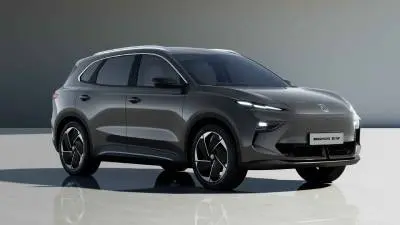
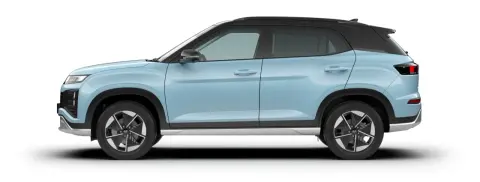
Kathmandu to Pokhara by electric car: where to charge and how much range you need
Wheels of Nepal · Last updated: · 8 min read
Kathmandu to Pokhara is about 200 km by road, and an electric car with a 45–60 kWh battery can normally cover it on one charge with a margin. For a fast top-up on the way, NEA has chargers at Dharke (Dhading) and at Mugling, and several in Pokhara.
This guide uses distances from a Department of Roads study and an Asian Development Bank (ADB) project, and charger locations from NEA announcements reported in the news. We do not have an official, up-to-date list of every working charger on the route, so call ahead before relying on any one of them.
The route and its distances
The usual route leaves the valley at Nagdhunga, joins the Prithvi Highway at Naubise, follows the Trishuli river down to Mugling, then continues west to Pokhara.
| Point on the route | km from Nagdhunga | Source |
|---|---|---|
| Nagdhunga (valley exit) | 0 | Department of Roads |
| Naubise (Prithvi Highway starts) | 12 | Department of Roads |
| Dharke | 14.5 | Department of Roads |
| Galchhi | 34 | Department of Roads |
| Malekhu | 56.5 | Department of Roads |
| Benighat | 62.5 | Department of Roads |
| Kurintar (Kuringhat) | 86 | Department of Roads |
| Mugling | 94 | Department of Roads |
| Aanbu Khaireni | about 102 | ADB: 8 km past Mugling |
| Pokhara | about 183 | ADB: 81 km from Aanbu Khaireni |
The Department of Roads figures come from its 2020 impact assessment for widening the Nagdhunga–Naubise–Mugling road, which gives the section as 94.7 km. The Mugling–Pokhara figures come from the ADB loan for that road, as reported by The Himalayan Times. Add your drive across the valley to Nagdhunga; the same report put the whole Kathmandu–Pokhara trip at 200 km.
Down, then up again
- Nagdhunga (0 km)
- Naubise (12 km)
- Mahadev Besi (23 km)
- Galchhi (34 km)
- Malekhu (56.5 km)
- Benighat (62.5 km)
- Kuringhat (86 km)
- Mugling (94 km)
| Nagdhunga (0 km) | 1,500 m |
|---|---|
| Naubise (12 km) | 840 m |
| Mahadev Besi (23 km) | 500 m |
| Galchhi (34 km) | 428 m |
| Malekhu (56.5 km) | 400 m |
| Benighat (62.5 km) | 375 m |
| Kuringhat (86 km) | 300 m |
| Mugling (94 km) | 268 m |
Source: Department of Roads, Nagdhunga–Naubise–Mugling road impact assessment (January 2020), Table 4-1
Leaving Kathmandu, the road drops about 1,232 m to Mugling, the lowest point of the Department of Roads section. An EV recovers some energy going downhill through regenerative braking, so the first half can use less battery than the distance suggests. The second half, from Mugling to Pokhara, climbs back up, and the return trip starts with the long climb from Mugling to Nagdhunga. Plan the way back more cautiously.
Where to charge on the way
NEA switched on 51 fast-charging stations across Nepal in September 2023. These are the ones on this route that news reports name:
| Location | Chargers reported | Operator | Source |
|---|---|---|---|
| Dharke, Dhading (km 14.5) | 2 stations | NEA | OnlineKhabar, myRepublica |
| Mugling, Chitwan (km 94) | 1 station | NEA | OnlineKhabar, myRepublica |
| Kalika Fuel Centre, Malepatan, Pokhara | 2 stations | NEA; run by the Armed Police Force welfare centre | OnlineKhabar |
| Tourist Bus Park, Pokhara | 1 station | NEA | OnlineKhabar, Himal Press |
| Begnas Tal, Pokhara | 1 station | NEA | OnlineKhabar |
| Talchowk, Pokhara (on the Prithvi Highway) | public charger | not named | Himal Press |
At launch, Himal Press and myRepublica reported a 142 kW charger at each NEA station, with payment by QR code or mobile app. OnlineKhabar described the Kalika Fuel Centre stations as having 60 kW DC, 22 kW AC and two 142 kW fast chargers each. Himal Press also reported DC fast chargers installed in Pokhara by CG and BYD, without locations.
Two warnings. These reports are from 2023 and 2024, and stations can be out of service. In May 2026, The Kathmandu Post reported that chargers remain concentrated in big cities such as Kathmandu, Pokhara and Chitwan, which makes long trips difficult. Check the NEA charging app or call before you rely on a stop.
How much battery do you need?
The honest answer depends on speed, load, air conditioning and the hills. So here is the arithmetic, with our assumptions shown.
Energy for 200 km at different consumption rates (kWh per 100 km, measured at the plug):
| Consumption (our assumption) | Energy for 200 km | Plus a 20% reserve |
|---|---|---|
| 15 kWh/100 km (small, efficient EV, gentle driving) | 30 kWh | 36 kWh |
| 18 kWh/100 km (mid-size EV) | 36 kWh | 43.2 kWh |
| 21 kWh/100 km (larger SUV, loaded, AC on) | 42 kWh | 50.4 kWh |
Our sums: 200 × 15 ÷ 100 = 30, then × 1.2 = 36, and so on. The 20% reserve is our own safety margin, not an official rule. A car's usable battery is often a little below the figure on the spec sheet.
Now compare with some popular EVs (official battery and WLTP range, indicative ex-showroom prices on the official sites, checked October 2026):
| Model | Battery | Claimed range (WLTP) | One charge for 200 km? |
|---|---|---|---|
| BYD Atto 1 Dynamic | 30.08 kWh | 230 km | Not with a reserve: plan a stop |
| BYD Dolphin | 44.9 kWh | 340 km | Usually, with care |
| BYD Atto 3 Advance | 49.92 kWh | 345 km | Usually |
| MG4 EV Comfort | 51 kWh | 350 km | Usually |
| BYD Atto 3 Superior | 60.48 kWh | 420 km | Yes, with a good margin |
| BYD Sealion 7 | 71.8 kWh | 440 km | Yes, with a good margin |
| Kathmandu–Pokhara trip | 200 km |
|---|---|
| BYD Atto 1 Dynamic | 230 km |
| BYD Dolphin | 340 km |
| BYD Atto 3 Advance | 345 km |
| MG4 EV Comfort | 350 km |
| BYD Atto 3 Superior | 420 km |
| BYD Sealion 7 | 440 km |
Source: Official Nepal sites of Cimex (BYD) and MG Motor Nepal, checked October 2026; trip distance from ADB via The Himalayan Times
"Usually" is our judgement from the sums above, not a promise. WLTP is a laboratory test; see our glossary entry on WLTP. Your own car's trip computer is the best guide: note how many kilometres you get per 10% of battery on a normal highway drive before you set off.
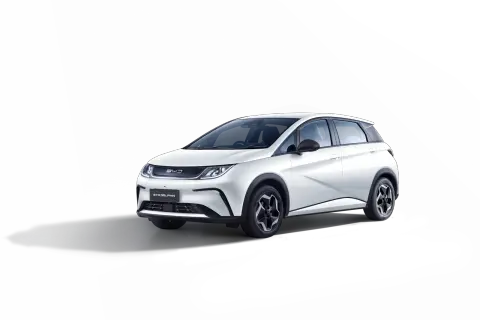 BYD DolphinRs 41.15 lakh
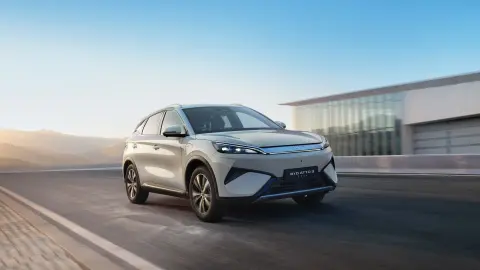 BYD ATTO 3Rs 62.9 lakh – Rs 78 lakh
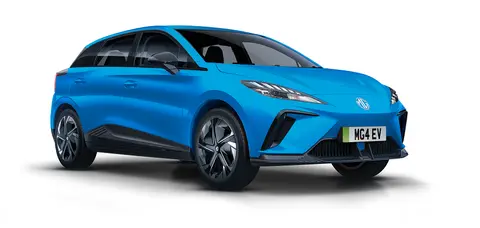 MG4 EVRs 41.49 lakh – Rs 49.99 lakh
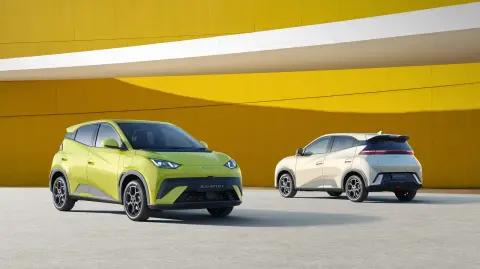 BYD ATTO 1Rs 30.75 lakh – Rs 34.8 lakh
What the trip costs in electricity
Charging at home before you leave. On NEA's domestic tariff, units above 250 a month cost Rs 11, and a 5% VAT on household use above 50 units was in force in September 2026 (The Kathmandu Post). At Rs 11.55 a unit, 36 kWh for the trip costs about Rs 416 (36 × 11.55).
Charging on the way. Public stations pay NEA a special tariff (Rs 4.30 to Rs 7.25 a unit depending on the time of day, according to NEA's 2025 tariff in the Electricity Regulatory Commission's July 2026 report), then add their own margin. The price you pay is shown on the charger or in the app. Our EV charging guide explains how public charging is priced. For your own car, try the charging cost calculator.
Check the road before you go
The Prithvi Highway is prone to landslides. Krishnabhir in Dhading, about 58 km from Naubise in the Department of Roads study, has had landslides for decades. In late August 2026 a landslide cut the road there. The Kathmandu Post reported that two-way traffic resumed on 17 September 2026, after 18 days, on a gravel track that the Department of Roads called a temporary solution. Several other stretches, including parts near Galchhi, Baireni and Malekhu, were still down to one lane.
A closure can force a long detour, so:
- Check the road status with Traffic Police (103) or Nepal Police (100) before you leave, especially in the monsoon.
- Leave home at 100%, so a detour or a queue is not a crisis.
- Carry a backup plan: know where the next charger is beyond your planned stop.
- Allow for queues at chargers during Dashain, Tihar and weekends.
Our monsoon driving tips cover the rest.
Quick checklist
| Before you leave Kathmandu | On the road |
|---|---|
| Charge to 100% at home | Watch kilometres per 10% of battery, not the range estimate |
| Install the NEA charging app | Top up at Mugling if you are below about 40% |
| Call ahead to Dharke, Mugling and your Pokhara charger | Charge to about 80% on fast chargers, then move on |
| Check road status (103 / 100) | Plan the return climb with more margin |
Choosing a car with long trips in mind? Browse our electric car price list or put models side by side in the compare tool.
Sources
- Department of Roads (MoPIT) – Improvement of Nagdhunga–Naubise–Mugling Road, Environment and Social Impact Assessment (January 2020; lengths, chainages and elevations)
- The Himalayan Times – ADB approves $195 million loan to improve Pokhara–Mugling highway (1 November 2019; 81 km Abukhaireni–Pokhara, 8 km Mugling–Abukhaireni, 200 km Pokhara–Kathmandu)
- The Kathmandu Post – Prithvi Highway road widening work at snail's pace (22 August 2022)
- OnlineKhabar – Where are charging stations in Nepal and how can you efficiently charge your EV? (16 October 2023; NEA station table)
- OnlineKhabar – 2 EV charging stations come into operation in petrol pumps in Pokhara (10 September 2023)
- myRepublica – 51 EV charging stations launched simultaneously across the country (September 2023)
- Himal Press – NEA switches on 51 charging stations across the country (6 September 2023)
- Himal Press – EVs thrive in Gandaki, but charging infra lags behind (25 September 2024)
- The Kathmandu Post – Nepal EV boom outpaces infrastructure and skilled workforce (13 May 2026)
- The Kathmandu Post – Decade-old alternative to a vital Prithvi Highway link remains on paper (12 September 2026)
- The Kathmandu Post – Prithvi Highway blockage ends Thursday as Krishnabhir link restored (17 September 2026)
- Electricity Regulatory Commission – Report on Long Run Marginal Cost Estimation and Tariff Design (July 2026), Annex 1: NEA charging-station tariff
- Nepal Electricity Authority – Consumer tariff rates (domestic single-phase slabs)
- The Kathmandu Post – Government weighs scrapping VAT on electricity (21 September 2026)
- Cimex (BYD Nepal) and MG Motor Nepal – official battery and WLTP range figures (via our catalogue)
#ev#charging#road-trips#pokhara#prithvi-highway#nea