Ather Rizta vs TVS iQube: family electric scooters compared
Wheels of Nepal · पछिल्लो अद्यावधिक: · १० मिनेट पढ्न
हाम्रा लेखका नेपाली संस्करण छिट्टै आउँदैछन्। तलका लेख अंग्रेजीमा छन्। अंग्रेजीमा पढ्नुहोस् →
Both start at Rs 3,19,900: the TVS iQube gives you more battery for that money (3.0 kWh against 2.7 kWh) and the cheapest 3.5 kWh version, while the Ather Rizta offers more storage (56 litres), more connected features and a longer battery warranty on its LR and R35 (8 years).
If you want an electric scooter the whole family can use, two names come up again and again in Nepal: the Ather Rizta and the TVS iQube. Both are made by Indian brands with established Nepali distributors: Vaidya Energy for Ather and Jagdamba Motors for TVS. Both start at exactly Rs 3,19,900, and both promise a comfortable seat, room for your things and a range that covers a week of commuting.
So how do you choose? This comparison uses the official Nepal figures from each brand's site. We have not ridden either scooter, so we will not tell you how they feel. We will show you where the numbers differ, and where they cannot be compared at all.
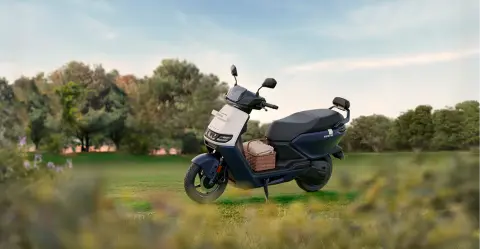 Ather Riztaरु ३,१९,९०० – रु ४,१९,९००vs
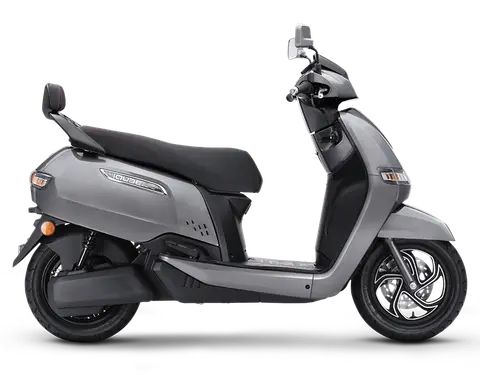 TVS iQubeरु ३,१९,९०० – रु ३,४९,९००Compare side by side →
Prices and variants
Indicative ex-showroom prices on the official sites, checked October 2026:
| Variant | Price | Battery |
|---|---|---|
| Ather Rizta Base | Rs 3,19,900 | 2.7 kWh |
| TVS iQube 3.0 | Rs 3,19,900 | 3.0 kWh |
| TVS iQube S 3.5 | Rs 3,49,900 | 3.5 kWh |
| Ather Rizta LR | Rs 3,79,900 | 2.7 kWh |
| Ather Rizta R35 | Rs 4,19,900 | 3.5 kWh |
TVS lists its prices as "starting from". Ather's booking form calls the Rizta versions "Rizta S" (2.7 kWh) and "Rizta Z" (3.5 kWh). Our Rizta vs 450 guide explains how those names match the price list.
What the table shows:
- At Rs 3,19,900, the iQube 3.0 gives you a bigger battery than the Rizta Base: 3.0 kWh against 2.7 kWh, or about 11% more stored energy for the same money.
- For a 3.5 kWh battery, the iQube S costs Rs 70,000 less than the Rizta R35 (Rs 3,49,900 against Rs 4,19,900).
- The Rizta range is wider, with three steps up to Rs 4,19,900, and the extra money buys features and warranty, not just battery (see below).
| Ather Rizta Base (2.7 kWh) | 3,19,900 |
|---|---|
| TVS iQube 3.0 (3.0 kWh) | 3,19,900 |
| TVS iQube S 3.5 (3.5 kWh) | 3,49,900 |
| Ather Rizta LR (2.7 kWh) | 3,79,900 |
| Ather Rizta R35 (3.5 kWh) | 4,19,900 |
Source: Ather Energy Nepal (Vaidya Energy) and TVS Motor Nepal (Jagdamba Motors) official sites, checked October 2026
Range: why you cannot compare the two claims
| Variant | Claimed range | How it was measured |
|---|---|---|
| Rizta Base / LR | 123 km | IDC (an Indian lab test cycle) |
| Rizta R35 | 161 km | IDC |
| iQube 3.0 | 100 km | TVS "real world range" |
| iQube S 3.5 | 115 km | TVS "real world range" |
At first glance the Rizta seems to go much further. But Ather quotes the IDC lab figure, while TVS quotes what it calls a real-world range. Lab cycles are gentle, so IDC figures normally come out higher than what riders see on real roads. The two sets of numbers are measured differently, so they cannot be compared directly.
A fairer guide is battery size, since both scooters are similar family designs. On that measure, the iQube 3.0 holds more energy than the Rizta Base, and the iQube S 3.5 and Rizta R35 hold the same. Expect real-world ranges to be in the same ballpark at the same battery size. Your hills, your weight, a passenger and your speed will matter more than the brand. Read more about range and test cycles and kWh in our glossary.
TVS's iQube page also mentions an IDC figure of 94 km and a "212 km" figure without saying which battery they apply to. These look like figures from other battery sizes, so we have not used them.
Performance
| Figure | Ather Rizta | TVS iQube |
|---|---|---|
| Peak power | 4.3 kW | not stated on the Nepal page |
| Torque | 22 Nm | not stated |
| Top speed | 80 km/h | 75 km/h (page gives one figure, not per variant) |
| 0–40 km/h | 4.7 seconds | 4.2 seconds (not per variant) |
Ather's figures come from its Nepal price-list blog; TVS's from its iQube page. On paper the two are close: the iQube is a little quicker to 40 km/h and the Rizta has a slightly higher top speed. Neither is built for speed. Both are city and suburban scooters.
Charging
| Ather Rizta | TVS iQube | |
|---|---|---|
| Home charger | 900 W | 950 W portable charger, any 15 A socket |
| Time (official) | about 4 h 10 min, 0–100% (2.7 kWh); about 4 h 30 min (3.5 kWh) | 4 h 30 min, 0–80% (both variants) |
Ather quotes 0–100% and TVS quotes 0–80%, so again the figures are not the same measure. Both will fill up overnight from a home socket. One caution: the iQube page gives other charging times in different sections, including about 2 hours to 80%, so ask the showroom for the figure for your variant. See our EV charging guide for home-charging safety tips.
Storage and practicality
This matters for a family scooter, and here the official figures differ clearly:
- Rizta: 34-litre boot under the seat plus a 22-litre front storage box ("frunk"), 56 litres in total.
- iQube: 32 litres of storage, according to TVS's page.
| Ather Rizta (34 L boot + 22 L front box) | 56 L |
|---|---|
| TVS iQube | 32 L |
Source: Ather Energy Nepal – Rizta page; TVS Motor Nepal – iQube page (October 2026)
If you carry groceries, a second helmet or a school bag every day, the Rizta's extra front box is a real advantage. The iQube page also lists a pillion backrest, which a passenger may appreciate. Check both in person: sit on them, put your helmet in the boot and have your passenger try the rear seat.
Features
Ather Rizta (from Ather Nepal's price list): Park Assist (slow reverse), AutoHold, FallSafe, Guide Me Home lights, emergency stop signal and coasting regeneration. Selected higher variants add Skid Control and Magic Twist. The LR and R35 add Google Maps navigation, the Ather app, find-my-scooter, live location sharing, trip planning, WhatsApp previews and tow and theft alerts.
TVS iQube (from TVS Nepal's page): Power Mode, Q-Park Assist (reverse assist), distance-to-empty display, SmartXonnect connectivity, LED headlight with daytime running lights and roadside assistance. TVS says each customer gets a dedicated relationship manager. The large 17.78 cm (7-inch) TFT screen is described only for the iQube ST, which is not in the Nepal price list, so ask which screen your variant has.
Colours: Ather lists four colours for the Rizta Base and nine for the LR and R35. TVS Nepal's page did not give colour names we could confirm, so ask at the showroom.
Warranty
| Ather Rizta | TVS iQube | |
|---|---|---|
| Battery | up to 5 years (Base, terms apply); 8 years (LR, R35) | page mentions a "5-year warranty" without saying what it covers |
| Scooter | not stated on the Rizta page | as above |
Neither page sets out the whole warranty clearly. Ask both dealers for the full written terms, covering battery and scooter, years and kilometres, and whether the cover transfers to a second owner. Battery cover is one of the biggest factors in an electric scooter's resale value.
Running cost
Charging costs are close, because the batteries are similar. Using the Nepal Electricity Authority's top domestic rate of Rs 11 per unit plus 5% VAT on household units above 50 a month, we get Rs 11.55 per unit, the highest likely rate:
| Variant | One full charge | Per km at the claimed range |
|---|---|---|
| Rizta Base / LR (2.7 kWh) | 2.7 × 11.55 = Rs 31.19 | ÷ 123 km = about Rs 0.25 (IDC) |
| Rizta R35 (3.5 kWh) | 3.5 × 11.55 = Rs 40.43 | ÷ 161 km = about Rs 0.25 (IDC) |
| iQube 3.0 (3.0 kWh) | 3.0 × 11.55 = Rs 34.65 | ÷ 100 km = about Rs 0.35 (real-world claim) |
| iQube S 3.5 (3.5 kWh) | 3.5 × 11.55 = Rs 40.43 | ÷ 115 km = about Rs 0.35 (real-world claim) |
These figures charge from empty to full and ignore charging losses. The Rizta looks cheaper per km only because its range is an IDC lab figure. At the same real-world distance, the cost per km will be very similar.
For comparison, a petrol scooter at 45 km per litre (our assumption) and Nepal Oil Corporation's Rs 200 per litre costs about Rs 4.44 per km. Either electric scooter cuts your fuel bill by around 90%. Try your own numbers in the EV vs petrol cost calculator, or see the full working in EV vs petrol in Nepal: the real 5-year cost.
Which suits whom?
The Ather Rizta may suit you if:
- storage is a priority, since 56 litres across boot and front box is the most here;
- you want navigation and app features on the dashboard (LR and R35);
- you want the longest battery warranty in writing (8 years on the LR and R35);
- you want the option of a bigger 3.5 kWh battery with Ather's connected features.
The TVS iQube may suit you if:
- you want the most battery for Rs 3,19,900 (3.0 kWh against 2.7 kWh);
- you want a 3.5 kWh battery for the least money (the iQube S at Rs 3,49,900);
- a pillion backrest matters to your passenger;
- there is a TVS service point closer to your home.
Either way, compare the nearest service points first. A family scooter that is off the road for a week waiting for a part is no bargain.
Before you buy
- Get the variant name, price and battery size in writing.
- Ask for the full warranty document for both battery and scooter.
- Test both on your own route, with your usual passenger and load.
- Check home charging: a safe socket where you park overnight is essential.
- Budget for what comes on top. Registration and insurance come on top of the showroom price.
Still undecided? Line them up in our compare tool, see where both sit in our best electric scooters in Nepal ranking, or browse the electric scooter price list.
स्रोतहरू
- Ather Energy Nepal (Vaidya Energy) – Ather 450 and Rizta price in Nepal (9 October 2026)
- Ather Energy Nepal – Rizta (pricing table, colours, battery warranty, storage)
- TVS Motor Nepal (Jagdamba Motors) – iQube (variants, prices, battery, range, charging, features)
- Nepal Electricity Authority – Consumer tariff rates
- The Kathmandu Post – Households using over 50 electricity units to pay five percent VAT (18 July 2026)
- Nepal Oil Corporation – retail fuel prices (petrol Rs 200 per litre in Kathmandu, Pokhara and Dipayal)
#ev#scooters#ather#tvs#comparison#family