How to choose a used EV in Nepal: battery health, warranty transfer, documents and price
Wheels of Nepal · Last updated: · 9 min read
When you buy a used EV in Nepal, the battery decides most of its value. Get a battery health report from the brand's authorised service centre, and confirm in writing whether the warranty transfers to you, before you pay.
Electric cars and scooters have been on Nepal's roads long enough that the first owners are now selling. A used EV can be good value, but it is not quite like buying a used petrol car. The engine of an EV is simple and wears slowly; the battery is the expensive part, and its condition and remaining warranty decide most of the vehicle's value.
This guide covers what is different about a used EV. For the general steps (the inspection walk-round, the sale agreement, and how ownership transfer works at the transport office), read our guide to buying a used car in Nepal alongside this one.
Step 1: Know what the car cost new, and why that matters
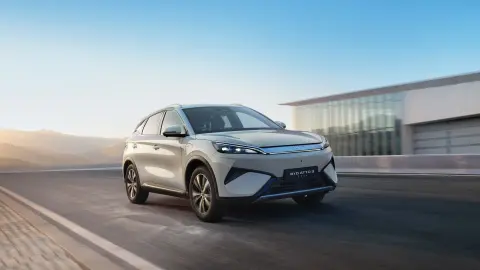
Start with the current new price. Our catalogue shows the indicative ex-showroom price on the official site for each model (checked October 2026), for example the Wuling Mini EV, BYD Dolphin or MG4 EV. Browse the full electric car price list or the electric scooter prices.
| Wuling Mini EV | 20.99 lakh |
|---|---|
| BYD Dolphin | 41.15 lakh |
| MG4 EV | 41.49 lakh |
Source: Wheels of Nepal catalogue: indicative ex-showroom prices on the official sites, checked October 2026
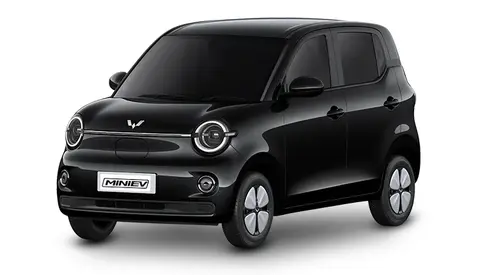 Wuling Mini EVRs 20.99 lakh – Rs 22.99 lakh
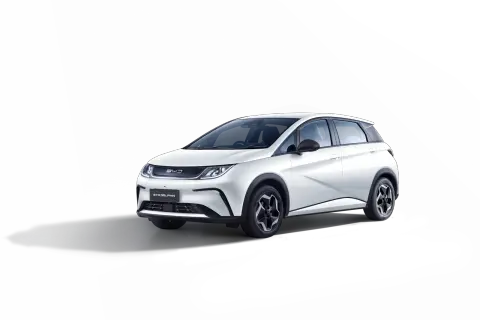 BYD DolphinRs 41.15 lakh
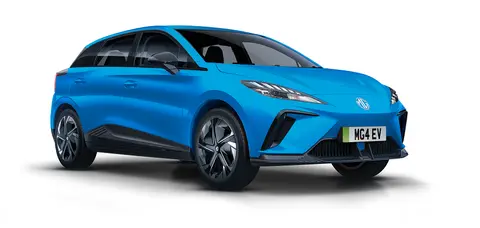 MG4 EVRs 41.49 lakh – Rs 49.99 lakh
Two things make used EV pricing in Nepal tricky right now:
- Tax changes move new prices. The FY 2026/27 budget switched electric car taxes from motor power to customs value, which pushed some models up and left others roughly the same. A used car's fair price follows today's new price for the same model, not what the seller paid. Our FY 2026/27 EV tax explainer shows which bands changed.
- New models and bigger batteries arrive quickly. If the current version of a model has a larger battery or longer warranty than the one you are looking at, the older one is worth less.
We do not publish a "typical" used EV depreciation figure, because we found no reliable Nepali source for it. Compare several listings for the same model and year, and use the checks below to adjust the price up or down.
Step 2: Check the battery's health
There is no simple dipstick for an EV battery. What you want is evidence of how much usable capacity is left. Battery capacity falls gradually with age and use; how fast depends on the chemistry, the climate, how the car was charged and how far it has gone. Brands treat some of this loss as normal: Leapmotor's Nepal warranty page, for example, excludes normal capacity loss from ageing, temperature, driving style or charging habits.
What you can do:
- Ask for a battery health report from an authorised service centre. Ask the seller to take the car to the brand's workshop, or go together, and ask whether the technicians can read the battery's "state of health" (SoH) with the brand's diagnostic tools and print a report. If the workshop cannot produce one, ask what it can check instead.
- Compare the range on a full charge. Charge to 100% and note the range estimate shown on the dash, then compare it with the official claimed range for that variant. Remember that the estimate is based on recent driving, so it is a rough clue, not proof.
- Look at the charging history. Ask how the car was usually charged: mostly at home on AC, or mostly on public DC fast chargers. Ask the seller directly; the service centre may also be able to tell you.
- Check for warning messages on the dashboard and in the app, and ask whether any battery repair or module replacement was done under warranty.
- Ask about accidents and flooding. The Kathmandu Post's explainer on EV fires notes that a severe crash or exposure to flood water can damage battery cells. Look underneath for scrapes or dents on the battery casing, and walk away from a car with signs of flood damage.
What the warranty says about capacity
Some warranties promise a minimum capacity, which tells you what the brand treats as a fault. Ather's Nepal warranty policy for the 450 series, for example, says the battery's nominal capacity shall not fall by more than 30% during the battery warranty period, as measured by Ather's own test. If a battery has dropped below a brand's threshold while still under warranty, that is a warranty claim, not just wear. Many car brands' Nepal pages do not publish such a threshold, so ask for the full warranty document.
Step 3: Find out whether the warranty transfers to you
This is the question most used EV buyers forget, and the answer differs by brand. We checked the official Nepal warranty pages:
| Brand | What the official Nepal page says about a second owner |
|---|---|
| Ather (450 series policy) | Warranty period runs from the original invoice date "regardless of any change of Vehicle ownership"; the seller must pass the warranty policy and manual to the buyer |
| Leapmotor | Not stated; cover starts at registration or handover and requires authorised servicing and complete records |
| MG | Not stated; "as per manufacturer standard warranty terms & policy" |
| Dongfeng (Nammi) | Not stated for the standard warranty; the paid extended warranty needs continuous Shikhar Insurance cover, and existing owners can join only after eligibility checks and inspection |
| iCAUR | Not stated; the extended warranty needs continuous Himalayan Everest Insurance cover and ends if the owner switches insurer |
| BYD (Cimex) | Not stated on the model pages, which say "terms apply" |
Checked October 2026. "Not stated" means the page does not mention transfer either way.
For BYD, note one more detail. In April 2025 the Nepali Times reported that Cimex had extended BYD's main warranty to 10 years or 200,000 km, up from 8 years or 160,000 km, but Cimex's current model pages state 8 years or 1,60,000 km. Ask Cimex which terms apply to the specific car you are buying, and whether they continue after a sale.
What to do: before you pay, take the car's registration number or VIN to the brand's authorised service centre and ask, in writing if possible:
- When did the warranty start, and when does it end (years and kilometres)?
- Does it transfer to a new owner, and is there any form or fee?
- Has the car been serviced on schedule at an authorised centre? Missed services can void cover. Leapmotor, Dongfeng and iCAUR all require authorised servicing and records.
- Is any extended warranty tied to an insurance policy that must move with the car?
Step 4: Collect the EV-specific documents
All the normal used-car papers apply: original bluebook, tax and renewal record, valid insurance, both parties' citizenship and a bank release letter if the car was financed. Our used car guide has the full list and explains how naamsari works. For an EV, add:
| Document or item | Why it matters |
|---|---|
| Original purchase invoice | Warranty periods usually count from the invoice or registration date |
| Warranty booklet or policy | Shows battery terms, conditions and any capacity guarantee |
| Authorised service record | Proves the servicing that keeps warranty valid |
| Battery health report | Your best evidence of remaining capacity |
| Extended warranty and insurance papers | Some extended warranties depend on continuous cover with one insurer |
| Supplied charger and cables | Some warranties assume you use the charger supplied by the maker; Ather's policy defines normal use as charging only with the charger it provided |
| Spare key and app access | Ask the seller to remove their account from the car's app so you can register |
Check that the chassis number and the motor or engine number recorded in the bluebook match the numbers on the vehicle.
Ownership transfer
Ownership transfer is done at the transport management office where the vehicle is registered. In October 2026 the Department of Transport Management amended its procedure directive so that a buyer no longer has to appear in person: a representative with the buyer's power of attorney can complete the transfer (Ratopati, Ekantipur). Ask your office what it currently accepts, and confirm the fee there, because fees are set by each province.
Step 5: Test drive and final checks
On a test drive, look for things you can verify rather than impressions:
- Every warning light goes out after start-up.
- The car charges on both AC and, if it supports it, DC; try a short session at a charger.
- The range estimate drops in line with the distance driven.
- Air conditioning, heating, lights and screen all work, since electrical faults can be costly to trace.
- Tyres: check the tread depth and look for uneven wear.
Paying for it
If you need a loan, Nepal Rastra Bank's 60% cap for private vehicles applies (Ekantipur, February 2025), and banks may value a used car below the asking price. Ask your bank about used-vehicle loans before you agree a price, and test the monthly payment in our EMI calculator.
Quick used EV checklist
- Today's new price for the same model checked
- Battery health report from an authorised centre
- Full-charge range estimate compared with the claim
- No flood or underbody damage
- Warranty start and end date confirmed with the brand
- Warranty transfer confirmed in writing
- Service record complete
- Invoice, warranty booklet, charger and both keys handed over
- Bluebook, tax, insurance and bank release letter checked
- Naamsari completed promptly
Thinking new instead? See our 10 things to consider before buying an EV, and compare models side by side in the compare tool.
Sources
- Ather Energy Nepal – Warranty Policy (450 series; warranty period applies regardless of change of ownership; battery capacity clause)
- Leapmotor Nepal – Warranty (start date, service conditions, battery exclusions)
- Dongfeng Nepal – Extended warranty (eligibility, inspection, insurance condition)
- iCAUR Nepal – Warranty (extended warranty tied to Himalayan Everest Insurance)
- MG Motors Nepal – MG4 EV (vehicle, high-voltage component and battery warranty)
- Nepali Times – BYD warranties (19 April 2025)
- Cimex (BYD Nepal) – BYD Dolphin (battery and vehicle warranty)
- Ratopati – Buyers no longer need to visit the transport office for registration and transfer (DoTM amends Transport Management Procedure Directive 2060, 12 October 2026)
- Ekantipur – Vehicle owners no longer required to be present for registration and ownership transfer (12 October 2026)
- The Kathmandu Post – Explainer: Why and how EVs catch fire (12 September 2026)
- Ekantipur – Now only 60% loan is available to buy a vehicle (25 February 2025)
#ev#used-vehicles#battery#warranty#naamsari#buying-guide