Installing an EV charger at home in Nepal: meter, load, cost and safety
Wheels of Nepal · पछिल्लो अद्यावधिक: · ९ मिनेट पढ्न
हाम्रा लेखका नेपाली संस्करण छिट्टै आउँदैछन्। तलका लेख अंग्रेजीमा छन्। अंग्रेजीमा पढ्नुहोस् →
For an electric scooter, home charging usually needs nothing more than a sound, earthed socket. For a car with a 7 kW wall box, you will usually need a higher-capacity NEA meter or a three-phase connection, a dedicated protected circuit and a licensed electrician.
Almost every EV owner in Nepal charges at home, and for good reason: it is cheaper than public charging and the car is full every morning. For a scooter, home charging usually means nothing more than plugging the supplied charger into a sound socket. For a car, it is a bigger job. A car charger can draw more current than everything else in your house combined, for hours at a time, so the meter, the wiring and the installation all need thought.
This guide covers the practical side of setting up home charging. For public chargers, highway trips and charging etiquette, see our EV charging guide.
Step 1: Work out how much power your charger needs
A charger's power in kilowatts (kW) tells you how much current it draws. On a normal single-phase 230 V supply, a rough rule is current (amps) ≈ power (watts) ÷ 230:
| Charger | Approximate current at 230 V | Typical use |
|---|---|---|
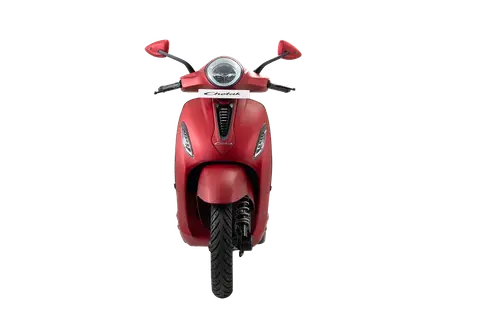
| Scooter charger, about 1 kW | about 4 A (1,000 ÷ 230) | Electric scooters; the Chetak C3501's off-board charger is rated 950 W |
| Example: a 3 kW car charger | about 13 A (3,000 ÷ 230) | Slower charging for a car |
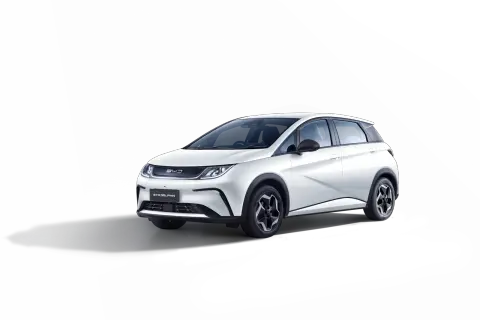
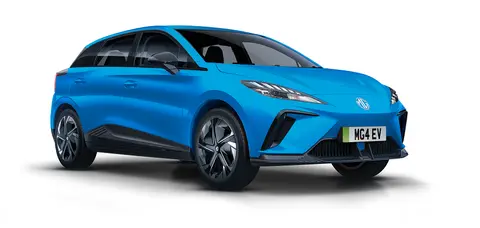
| Wall box, 7 kW | about 30 A (7,000 ÷ 230) | The maximum AC speed our catalogue lists for the BYD Dolphin and MG4 EV |
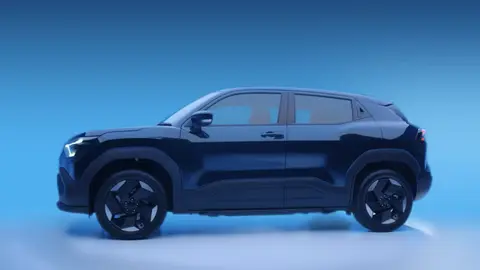
| Wall box, 7.4 kW | about 32 A (7,400 ÷ 230) | Suzuki's Nepal site bases e VITARA charging times on 7.4 kW single-phase |
Arithmetic for illustration; real current depends on the charger and your supply voltage.
| Scooter charger, about 1 kW | 4 A |
|---|---|
| 3 kW car charger (example) | 13 A |
| 7 kW wall box | 30 A |
| 7.4 kW wall box | 32 A |
Source: Arithmetic in this article (power in watts ÷ 230), for illustration only
Now compare that with your NEA meter. Domestic single-phase meters in NEA's tariff come in 5, 15, 30 and 60 ampere capacities. A 7 kW wall box alone needs about 30 A, so on a 15 A meter it would not fit alongside your other appliances, and even a 30 A meter would leave nothing for the rest of the house while the car charges.
In short:
- A scooter normally works on any domestic connection, from a sound, earthed socket.
- A car on a slow charger may work on a 15 A or 30 A meter if you charge at night when other loads are low, but ask an electrician to check.
- A car with a 7 kW wall box usually needs a higher-capacity single-phase meter or a three-phase connection.
Step 2: Choose the right NEA connection
The rule that allows home charging
In January 2022 NEA brought in its Electricity Distribution Bylaw, which allows EV owners to install charging equipment at home and to upgrade their electricity supply for it (myRepublica). Spotlight Nepal reported that the bylaw lets customers charge through a separate meter in their home compound when the vehicle cannot be charged within the approved domestic load, and that NEA will supply a separate meter on request. Onlinekhabar reported at the time that NEA planned a separate subscription for private charging, with rates that vary by time and season; we could not find such a home tariff in NEA's current published tariff, so ask your distribution centre whether one is available.
Your options
| Option | When it makes sense |
|---|---|
| Keep your current meter | Scooter, or occasional slow car charging at night |
| Increase the meter capacity (for example to 30 A or 60 A single-phase) | Car with a slow or medium charger |
| Three-phase connection | 7 kW-plus wall box with other heavy loads in the house |
| Separate meter for the charger | Tenants, shared houses, or if you want charging billed separately |
What NEA charges for the paperwork
NEA's published service charges include:
| Service | NEA fee |
|---|---|
| Application form (domestic) | Rs 100 |
| New domestic connection, 15 A / 30 A / 60 A single-phase | Rs 150 / Rs 300 / Rs 500 |
| New domestic three-phase connection | Rs 1,000 |
| Increasing meter capacity (single- or three-phase) | Rs 0 |
| New pole, if needed (single-phase / three-phase) | Rs 500 / Rs 1,000 per pole |
Source: NEA consumer tariff, "other charges and service fees". Wiring, the meter board and the charger itself are separate costs.
Note that increasing the capacity of an existing meter carries no NEA service fee in the published schedule. Your distribution centre may still ask for other documents or costs (for example if the service cable or transformer has to be upgraded), so ask for a written list.
Step 3: Understand what charging adds to your bill
Single-phase domestic tariff
NEA bills single-phase homes in blocks: each block of monthly units has its own rate, plus a monthly minimum charge that rises with your total use. For a 15 A meter, units 101 to 250 cost Rs 9.50 each and units above 250 cost Rs 11.00. The 30 A and 60 A meters use the same energy rates from 21 units upward, with higher minimum charges.
Worked example (illustration only). A household on a 15 A meter uses 150 units a month. NEA's billing method gives:
- Without the car: Rs 125 minimum + 20 × 4 + 10 × 6.50 + 20 × 8 + 100 × 9.50 = Rs 1,380
- Add 200 units of car charging (350 units in total): Rs 175 minimum + 20 × 4 + 10 × 6.50 + 20 × 8 + 200 × 9.50 + 100 × 11 = Rs 3,480
| Household only, 150 units | 1,380 |
|---|---|
| Plus 200 units of car charging | 3,480 |
Source: Worked example in this article using NEA's published single-phase domestic tariff, before VAT
So the car's 200 units add about Rs 2,100 to the bill, roughly Rs 10.50 per unit. On top of that, the FY 2026/27 budget brought in 5% VAT on household electricity above 50 units a month (The Kathmandu Post). As of 21 September 2026, the Post reported the government was weighing removing it; check your latest bill.
How many units will your car use? Multiply the kWh you put in by a little more than one for charging losses. For example, filling the BYD Dolphin's 44.9 kWh battery from 20% to 80% adds about 27 kWh (0.6 × 44.9). Our EV charging cost calculator does this for you.
Three-phase domestic tariff
NEA's three-phase low-voltage (400 V) domestic tariff charges one rate for every unit: Rs 10.50 from Asar to Kartik and Rs 11.50 from Mangsir to Jestha. The monthly minimum charge is Rs 1,100 up to 10 kVA and Rs 1,800 above 10 kVA. That is a higher fixed cost than a single-phase meter, so three-phase pays off only when you genuinely need the capacity.
Why your bill differs from a public charger's price
Public charging stations are on a separate NEA tariff with cheaper night-time rates, but operators add their own margin, which is why the price you pay at a public charger is not the NEA rate. Our charging guide explains those rates.
Step 4: Install it safely
The Kathmandu Post reported that an MG electric car that burned overnight in Budhanilkantha in January 2024 while plugged in was found by the manufacturer to have a short circuit in the charging cable and socket assembly; the high-voltage battery was undamaged. The Post's editorial board has also argued that chargers and cables need the same safety scrutiny as the cars. The lesson is simple: the weak point is often the wiring, not the car.
Before installation
- Use a licensed electrician who has installed EV chargers before. Ask them to check your meter capacity, wiring, distribution board and earthing.
- Run a dedicated circuit for the charger, with its own breaker and earth-leakage (residual current) protection.
- Use the charger the carmaker supplies or approves. Ather's warranty policy, for example, defines normal use as charging only with the charger Ather provided. Using other equipment can affect your warranty.
- Match the connector. Check that the wall box or cable fits your car's charging port before you buy one separately.
Where to put it
- A covered, dry spot, protected from rain and flooding; mount the unit above any level where water collects in the monsoon.
- Where the cable reaches the port without stretching or crossing a path where it will be driven over.
- Away from anything flammable, such as fuel cans, paper or stored furniture.
Everyday habits
- Never use an extension cord or multi-plug for car charging, and do not charge from a socket that is loose, cracked, discoloured or warm to the touch.
- Check the plug and socket regularly. If you smell burning or the plug feels hot, stop charging and call the electrician.
- Coil the cable after use and keep it off a wet floor.
- Charge at night when other household loads are low, which also keeps the total current within your meter's limit.
A simple plan
| Step | Action |
|---|---|
| 1 | Find your charger's power and your meter's amp rating |
| 2 | Ask an electrician whether your wiring and earthing can take the load |
| 3 | Apply to your NEA distribution centre for a capacity increase, three-phase or separate meter if needed |
| 4 | Install on a dedicated, protected circuit, in a dry place |
| 5 | Check the first few bills to see what charging really costs |
Still choosing a car? Compare charging speeds and battery sizes in our electric car price list and the compare tool, and read 10 things to consider before buying an EV. If you are deciding between electric and petrol, the EV vs petrol 5-year cost does the full sum. Prices in our catalogue are indicative ex-showroom prices from the official sites (checked October 2026).
स्रोतहरू
- Nepal Electricity Authority – Consumer tariff rates (domestic single-phase and three-phase tariffs; charging-station tariffs; service charges)
- Spotlight Nepal – NEA decides to allow vehicle charging stations in the individual household compound (20 January 2022)
- myRepublica – Residents can install EV charging units for their personal use: NEA
- Onlinekhabar – Now, you can have your own private charging station (19 January 2022)
- The Kathmandu Post – Households using over 50 electricity units to pay five percent VAT (18 July 2026)
- The Kathmandu Post – Government weighs scrapping VAT on electricity (21 September 2026)
- The Kathmandu Post – Explainer: Why and how EVs catch fire (12 September 2026)
- The Kathmandu Post – Editorial: Nepal fell in love with EVs. It forgot to regulate them (14 September 2026)
- Suzuki Nepal – e VITARA (7.4 kW single-phase AC charging times)
- Chetak Nepal – Chetak C3501 (950 W off-board charger, charging time)
- Ather Energy Nepal – Warranty Policy (charging only with the supplied charger)
- Cimex (BYD Nepal) – BYD Dolphin (battery size, AC charging)
- MG Motors Nepal – MG4 EV (AC charging)
#ev#charging#home-charging#nea#electricity-tariff#safety