Monsoon driving and vehicle care tips for Nepal roads
Wheels of Nepal · पछिल्लो अद्यावधिक: · ८ मिनेट पढ्न
हाम्रा लेखका नेपाली संस्करण छिट्टै आउँदैछन्। तलका लेख अंग्रेजीमा छन्। अंग्रेजीमा पढ्नुहोस् →
Check road status with the police (Traffic Police 103) before every long monsoon trip, travel in daylight, never stop under an unstable slope or drive into water you cannot judge, and get your tyres, brakes and wipers checked before the rains.
Nepal's monsoon brings the year's worst driving conditions: slippery roads, poor visibility, swollen streams across the road and landslides that can close a highway within minutes. The Department of Hydrology and Meteorology (DHM) gives 13 June as the normal onset date and 2 October as the normal withdrawal date, but real seasons vary a lot. In 2025, DHM recorded the monsoon arriving in eastern Nepal on 29 May and withdrawing on 10 October. Plan for wet-season risks from late May until mid-October, and for landslide-damaged roads for some weeks after.
This guide covers what official advisories ask drivers to do, how to deal with landslide zones and flooded roads, what to check on your vehicle, and specific advice for electric cars and scooters.
Before you travel: check, then decide
The single most useful habit is to check road conditions before a long trip. In July 2026 the Kathmandu District Administration Office asked travellers to:
- watch for weather warnings from DHM;
- check road conditions with the police before setting out when floods or landslides may block roads;
- avoid stopping in areas prone to floods or landslides;
- continue only after confirmation that a blocked road has reopened.
The office listed these numbers: Nepal Police 100, Traffic Police 103, and Armed Police Force 1114 and 1234. Save them in your phone before the season starts.
The Department of Roads gave similar advice in July 2026, when it reported 19 highways disrupted by rain, floods and landslides, seven of them completely blocked. Its spokesperson urged travellers to get updated road reports before starting a journey.
- Completely blocked 36.8%
- Disrupted, not fully blocked 63.2%
| Completely blocked | 7 highways |
|---|---|
| Disrupted, not fully blocked | 12 highways |
Source: Department of Roads, reported by The Himalayan Times (21 July 2026)
Respect night closures
Police sometimes close dangerous stretches at night. In August 2026, Nepal Police stopped night traffic on part of the BP Highway between Khurkot, Nepalthok and Katunjebesi from 6 pm to 4 am because of flash flood risk, and closed Kanti Lokpath from 5 pm to 5 am. These closures change through the season, so do not rely on last week's information. If police have closed a road, wait.
Plan the trip around daylight
Even where roads are open, a landslide or washed-out section is much easier to see and avoid in daylight. Leave early, build in spare time for delays, and carry water, snacks, a torch, a phone power bank and any medicines you need in case you are stuck for hours.
Driving through landslide-prone areas
- Do not stop under a slope that shows fresh cracks, falling stones or water seeping out. The DAO's advice is to avoid stopping in landslide-prone areas.
- Watch for small warning signs: pebbles or mud on the road, muddy water running across, or a tree leaning at a new angle.
- Keep a gap from the vehicle ahead so you have room to stop or reverse if something falls.
- Follow traffic police and road crews. They may run one-way traffic past a cleared slide.
- Do not try to drive over fresh debris. If a slide has covered the road, turn back or wait for it to be cleared.
Flooded roads and streams
Water is harder to judge than it looks. Hyundai's owner's manual is a good example of what carmakers advise: do not drive into a flooded area unless you are sure the water is below the bottom of the wheel hub; if you cannot tell how deep it is, turn around and find another route. It also says to go slowly through water and to leave extra stopping distance afterwards, because wet brakes can be less effective.
Practical points:
- Never enter fast-flowing water, even if it looks shallow. A swollen stream across a road can push a car or a scooter sideways.
- If you must cross standing water, go slowly and steadily so you do not push a bow wave into the engine bay. Do not change gear or stop halfway.
- After crossing, dry the brakes. The Hyundai manual suggests pressing the brake pedal lightly a few times while moving slowly.
- Read your own manual. Each vehicle has its own limits, and many manuals state a specific water depth. For two-wheelers, low air intakes and exhausts mean even modest water can cause trouble.
If your vehicle stalls in water, do not keep trying to restart it, and get it checked before driving again.
Brakes, tyres and visibility
A few minutes of checks before the monsoon prevents most problems.
Tyres
Grip on wet roads depends heavily on tread. Look for the tread-wear indicator bars moulded into the grooves; when the tread is level with them, the tyre needs replacing. Check pressures when the tyres are cold, using the figures on the door pillar or in your manual. On a motorcycle or scooter, worn tyres are especially dangerous on wet paint lines and metal plates.
Brakes
Ask your workshop to check pads, discs or shoes, and brake fluid at the monsoon service. On wet roads brake earlier and more gently. If your vehicle has ABS, keep firm pressure on the brake in an emergency rather than pumping it, unless your manual says otherwise.
Lights, wipers and windows
- Replace wiper blades that smear or chatter.
- Make sure headlights, brake lights and indicators all work, and use dipped headlights in heavy rain.
- Use the air conditioning or demister to clear fogged windows rather than wiping them by hand.
Riders
- Wear a good rain suit and a visor that is clean and not scratched; bright or reflective colours help other drivers see you.
- Slow down well before bends and avoid sudden braking or throttle on painted markings and manhole covers.
- Avoid riding through water you cannot see the bottom of; potholes hide under puddles.
Electric vehicles and water
EVs are designed and tested to cope with rain and normal wet roads, and you can drive them in the monsoon like any other vehicle. A few extra points apply.
Battery protection has limits
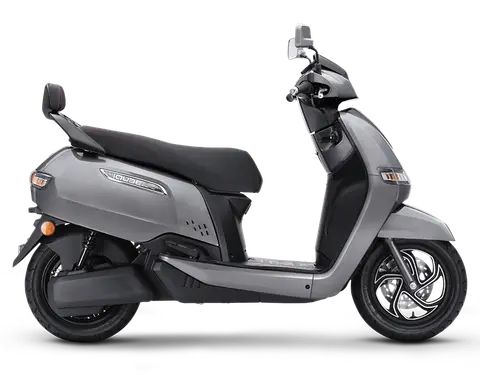
Manufacturers seal battery packs against water and dust. TVS, for example, says the iQube's lithium-ion battery packs are rated IP67 for water and dust resistance. That rating comes from a standard laboratory test of temporary immersion; it is not permission to ride or drive through deep floodwater. Treat a flooded road the same way you would in a petrol vehicle: if you cannot see the bottom, find another route.
If an EV has been submerged
After Hurricane Ian in the United States in 2022, the US road-safety regulator NHTSA advised that flood-damaged EV batteries should be treated as energised and fully charged, and that fires could start right away or weeks later. It recommended parking flooded EVs well away from buildings, other vehicles and anything that can burn. Those cases involved seawater, but the safe lesson is the same anywhere:
- Do not drive or charge an EV that has been in deep water.
- Park it in the open, away from your house, and contact the authorised service centre.
- Tell your insurer promptly.
Charging in the rain
Charging connectors are built to be used outdoors, but follow the maker's instructions. Do not charge with a cable or socket that is damaged or sitting in standing water, and keep home sockets and wall boxes under cover. Our EV charging guide covers home charging and highway trip planning.
After the monsoon: a quick check-up
When the rains ease, book a service and ask the workshop to look at:
| Area | What to check |
|---|---|
| Brakes | Pads, discs, fluid, any grinding or pulling |
| Tyres | Tread depth, cuts and bulges from potholes, pressures |
| Underbody | Mud build-up, damaged shields, rust starting on exposed metal |
| Air filter and cabin filter | Clogging from dust and damp |
| Electrical | Lights, connectors and any warning lights |
| Interior | Damp carpets or musty smell, which can mean a leak |
If you are shopping for a vehicle that suits rough monsoon roads, compare ground clearance and tyre sizes in our compare tool, or browse the SUV price list and scooter price list. Check that your insurance is up to date before the season starts.
Monsoon checklist
- Save 100, 103, 1114 and 1234 in your phone.
- Check DHM warnings and road status before every long trip.
- Travel in daylight and never wait under an unstable slope.
- Do not enter water you cannot judge; turn around.
- Check tyres, brakes, wipers and lights before the rains.
- EV owners: never drive or charge after a flood, and park a flood-damaged EV in the open.
स्रोतहरू
- Department of Hydrology and Meteorology – Monsoon onset and withdrawal (normal dates)
- Department of Hydrology and Meteorology – Monsoon 2025 seasonal summary
- Nepal News – Nepal Police issues travel advisory as landslides sever multiple highways (12 August 2026)
- The Himalayan Times – Kathmandu DAO urges caution while travelling during heavy rain (18 July 2026)
- The Himalayan Times – Floods, landslides disrupt traffic on 19 highways across Nepal (21 July 2026)
- Hyundai owner's manual – Driving in flooded areas
- TVS Motor – TVS iQube (IP67 battery pack)
- ABC7 – NHTSA guidance on flood-damaged electric vehicles after Hurricane Ian (2022)
#ownership#safety#monsoon#maintenance#ev#highways