Petrol vs electric two-wheelers in Nepal: which should you buy?
Wheels of Nepal · पछिल्लो अद्यावधिक: · ९ मिनेट पढ्न
हाम्रा लेखका नेपाली संस्करण छिट्टै आउँदैछन्। तलका लेख अंग्रेजीमा छन्। अंग्रेजीमा पढ्नुहोस् →
If you ride most days and can charge safely where you park overnight, an electric scooter is usually the better buy: at our figures it costs about Rs 0.46 per km to run against about Rs 4.44 for petrol. If you cannot charge at home or often ride long hill routes, petrol is still the practical choice. To compare models, see every scooter price in Nepal, petrol and electric side by side.
Electric scooters are everywhere in Kathmandu now, and the question we hear most is simple: should my next two-wheeler be petrol or electric? There is no single right answer. An electric scooter can save a daily commuter lakhs of rupees, while a rider who covers long hill roads with no charging point at home may be better off with petrol for now.
Work through the six questions below. Prices quoted are indicative ex-showroom prices on the official sites, checked October 2026.
Question 1: How far do you ride each day?
This decides how much you save, because fuel is the biggest running cost.
Using Nepal Oil Corporation's current petrol price of Rs 200 per litre (Kathmandu, Pokhara and Dipayal) and Nepal Electricity Authority's domestic tariff, here is a rough per-km comparison. The efficiency figures are our assumptions; we set them a little worse than the brands' claims.
| Petrol scooter | Electric scooter | |
|---|---|---|
| Assumed efficiency | 45 km per litre (TVS claims 53.84 km/l, ARAI, for the Jupiter) | 4 units (kWh) per 100 km at the plug |
| Price | Rs 200 per litre | Rs 11 per unit + 5% VAT = Rs 11.55 |
| Cost per km | about Rs 4.44 | about Rs 0.46 |
What that means over a month:
| Daily riding | Petrol per month | Electric per month | You save per month |
|---|---|---|---|
| 15 km | Rs 2,000 | Rs 208 | about Rs 1,800 |
| 30 km | Rs 4,000 | Rs 416 | about Rs 3,600 |
| 50 km | Rs 6,667 | Rs 693 | about Rs 6,000 |
Monthly figures assume 30 riding days.
| 15 km a day, petrol | 2,000 |
|---|---|
| 15 km a day, electric | 208 |
| 30 km a day, petrol | 4,000 |
| 30 km a day, electric | 416 |
| 50 km a day, petrol | 6,667 |
| 50 km a day, electric | 693 |
Source: Our calculation above: petrol at Rs 200 a litre (Nepal Oil Corporation), electricity at Rs 11.55 a unit (NEA tariff plus 5% VAT), 30 riding days
We used the highest likely electricity rate. Your extra units may cost Rs 9.50 instead of Rs 11, and the 5% household electricity VAT above 50 units, in force since July 2026, may be removed, since the government said in September it plans to. Either change would make electric slightly cheaper still. The full five-year working is in EV vs petrol in Nepal: the real 5-year cost, or try your own numbers in the EV vs petrol cost calculator.
Rule of thumb: the more you ride, the faster an electric scooter pays back its higher price. If you ride only a few kilometres a week, the saving is small and other factors matter more.
Question 2: Can you charge where you park overnight?
This is the deal-breaker for many riders, more than price or range.
- You need a safe socket where the scooter sleeps. Most electric scooters charge from an ordinary home socket through the supplied charger. Official figures are about 4.5 hours for the TVS iQube, about 4.2 hours for the base Ather Rizta, and about 6 hours for NIU's Gova G3.
- Renters and apartment dwellers: ask your landlord before you buy. Charging through a long extension lead running down from an upper floor is unsafe, and you would be relying on someone else's meter.
- Check your meter. An electric scooter adds roughly 40 units a month at 1,000 km. That is easy for most homes, but it may move you into a higher slab.
- Public charging for two-wheelers is patchy outside big cities. Do not plan around it.
If you cannot charge at home or at work, petrol is usually the practical choice for now.
Question 3: How hilly is your route, and what do you carry?
Nepal's terrain tests any small vehicle.
- Electric motors give strong pull from a standstill. On steep city lanes many riders find them easy to live with. On long climbs, and with a passenger, an electric scooter uses its battery much faster than its brochure range suggests.
- Ranges are lab figures. Ather quotes 123 km (IDC test) for the base Rizta, TVS claims 100 km for the iQube 3.0 and 158 km for the Orbiter V2, and NIU claims 90 km for the Gova G3. Plan on getting noticeably less on hilly routes, especially two-up. Our glossary explains range and test cycles.
- Regenerative braking recovers a little energy on long descents, but it does not cancel out the climb.
- Look at power and top speed. The Gova G3, for example, has a 2.7 kW motor and a listed top speed of 65 km/h. That is fine in the city but limited on highways. The petrol Jupiter's engine is rated at 5.9 kW.
If you regularly ride long mountain roads, such as Kathmandu to Pokhara or village trips with luggage, petrol still has a clear range advantage. Refuelling takes minutes, and pumps are everywhere.
Question 4: Is there a proper service centre near you?
A cheap vehicle becomes expensive if it sits waiting for a part.
- Petrol scooters and bikes from established brands have the widest service and parts network across Nepal, and almost any mechanic can do basic work.
- Electric scooters need brand-trained technicians for the motor, battery and software. Before buying, ask the dealer where the nearest authorised service point is to your home, and how long a battery or controller repair usually takes.
- Read the battery warranty. Ather lists 5 years for the base Rizta's battery and 8 years for the Rizta LR. Warranty terms vary by brand and variant, so read what counts as a defect.
Question 5: How long will you keep it, and does resale matter?
- Petrol two-wheelers have an established second-hand market, and their resale values are fairly predictable.
- Electric two-wheelers are newer in Nepal, and there is no reliable resale data yet. Buyers of used EVs worry about battery health, so a scooter with a long battery warranty that transfers to the next owner is easier to sell.
- If you plan to sell within two or three years, petrol carries less resale risk. If you plan to keep it for five years or more, the EV's running-cost saving has more time to pay off.
Question 6: What about tax and registration?
- Annual vehicle tax is set by each province. For FY 2083/84, Ratopati's province-by-province comparison found that a private petrol two-wheeler up to 125cc pays between Rs 2,700 a year (Karnali and Sudurpashchim) and Rs 3,100 (Koshi).
- Electric two-wheelers are taxed by motor wattage, and the rules differ more. The same comparison notes that Lumbini exempts electric scooters up to 500 W, while Madhesh bases the tax on the purchase price instead of motor power. We could not confirm this year's rates in other provinces, including Bagmati, so check at your transport office or on your provincial government's website.
- Import taxes are built into the showroom price. The FY 2026/27 budget's new value-based EV tax bands apply to electric cars, not two-wheelers. See Nepal's FY 2026/27 EV tax changes for details.
Real models side by side
Indicative ex-showroom prices from the official sites, checked October 2026:
| Model | Type | Price | Key figure |
|---|---|---|---|
| TVS Jupiter | Petrol scooter, 113.3cc | Rs 2,64,900 | 53.84 km/l claimed (ARAI) |
| Honda Dio 110 STD | Petrol scooter, 109.5cc | Rs 2,69,900 | 5.3 litre tank |
| Honda Shine 125 DRS | Petrol motorcycle, 123.9cc | Rs 2,99,900 | 10.5 litre tank |
| NIU Gova G3 | Electric scooter | Rs 2,59,900 | 90 km claimed, 65 km/h top speed |
| TVS Orbiter V2 | Electric scooter, 3.1 kWh | Rs 2,81,900 | 158 km claimed |
| TVS iQube 3.0 | Electric scooter, 3 kWh | Rs 3,19,900 | 100 km claimed |
| Ather Rizta Base | Electric scooter, 2.7 kWh | Rs 3,19,900 | 123 km (IDC) |
| NIU Gova G3 (electric) | 2,59,900 |
|---|---|
| TVS Jupiter (petrol) | 2,64,900 |
| Honda Dio 110 STD (petrol) | 2,69,900 |
| TVS Orbiter V2 (electric) | 2,81,900 |
| Honda Shine 125 DRS (petrol) | 2,99,900 |
| TVS iQube 3.0 (electric) | 3,19,900 |
| Ather Rizta Base (electric) | 3,19,900 |
Source: Official Nepal sites (TVS, Honda, NIU, Ather), October 2026 (table above)
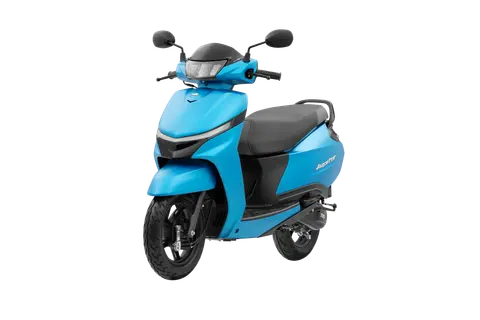 TVS Jupiterरु २,६४,९००
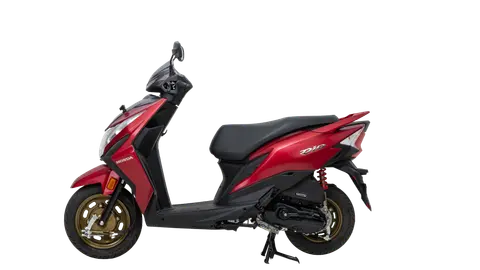 Honda Dio 110रु २,६९,९०० – रु २,८४,९००
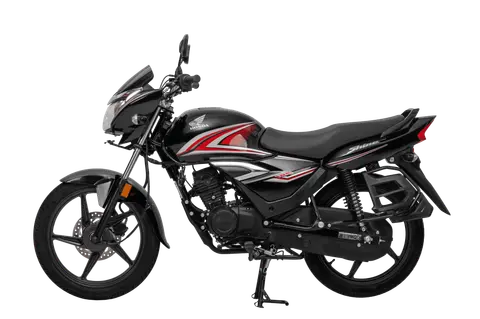 Honda Shine 125रु २,९९,९०० – रु ३,०९,९००
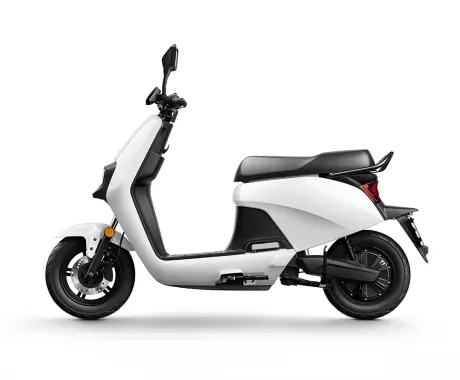 NIU Gova G3रु २,५९,९००
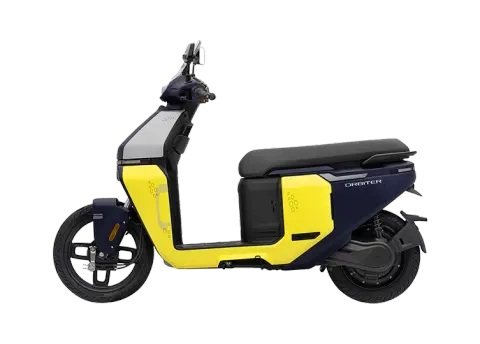 TVS Orbiterरु २,८१,९००
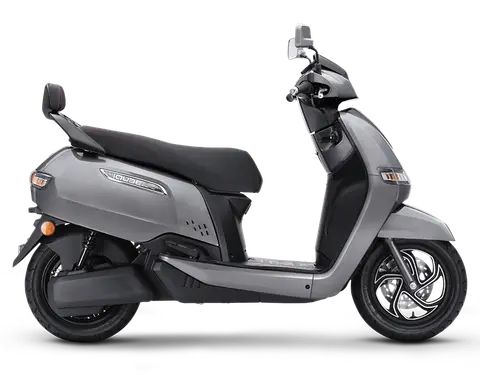 TVS iQubeरु ३,१९,९०० – रु ३,४९,९००
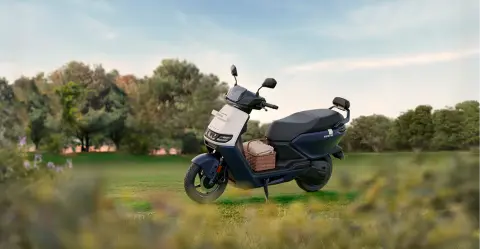 Ather Riztaरु ३,१९,९०० – रु ४,१९,९००
Notice that electric scooters are no longer always the expensive choice. The Gova G3 and Orbiter V2 sit in the same price range as the popular petrol scooters. Browse more options in the electric scooter price list.
Quick decision guide
Electric probably suits you if:
- you ride mostly in the city or on a fixed daily route that sits well within the realistic range;
- you can charge safely overnight at home or at work;
- you plan to keep the scooter for several years;
- there is an authorised service point nearby.
Petrol probably suits you if:
- you have nowhere safe to charge;
- you regularly ride long hill routes, highways or carry heavy loads;
- you live far from any EV service centre;
- you want the most predictable resale value, or you ride very little.
Whichever you choose, test-ride on your route, ask the dealer for the warranty terms in writing, and budget for more than the showroom price: registration and insurance come on top.
स्रोतहरू
- Nepal Oil Corporation – press release on retail fuel prices, dated 2083/06/29
- Nepal Electricity Authority – Consumer tariff rates
- TVS Motor Nepal – iQube
- TVS Motor Nepal – Orbiter
- TVS Motor Nepal – Jupiter
- Ather Energy Nepal – Rizta
- NIU Nepal – Gova
- Honda Nepal – Dio
- Honda Nepal – Shine
- TVS Motor – TVS Jupiter 110 mileage (ARAI-certified figure)
- Ratopati – In which province is the annual vehicle tax cheaper? (3 Shrawan 2083, FY 2083/84 rates by province)
- The Kathmandu Post – Households using over 50 electricity units to pay five percent VAT (18 July 2026)
#ev#scooters#motorcycles#buying-guide#running-cost